

West Coast League
Photographing Baseball is A Lot Like Fishing

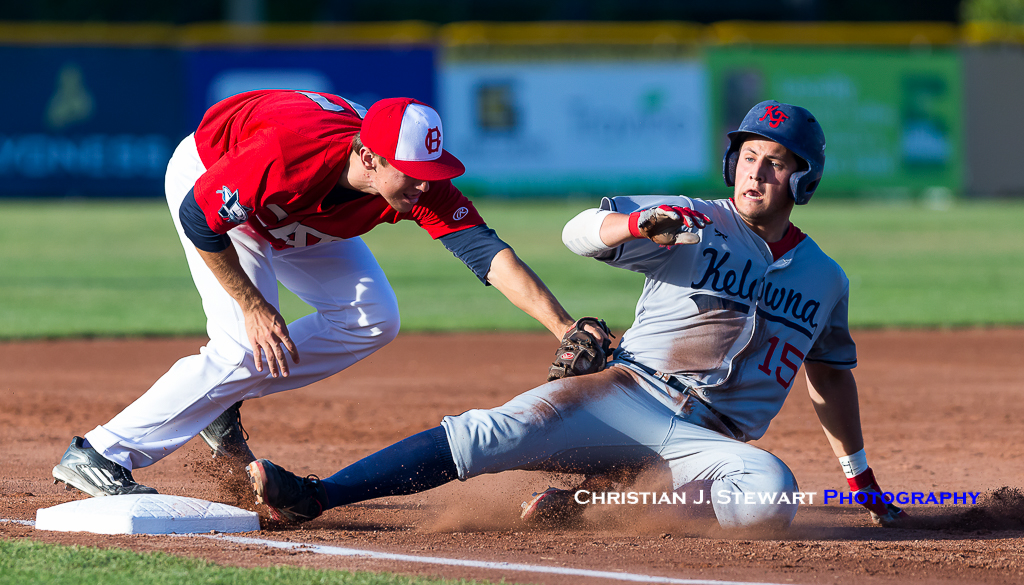
With very little baseball to go out and photograph over the course of the last year (thanks to COVID-19), it has been a good time for me to reflect on the games I have covered over the last 15 years – everything from house league T-Ball, Mosquito (9-10 year olds) right on up through elite high school leagues, to our summer collegiate team – the Victoria HarbourCats – to the 2017 World Junior Championships and finally to the MLB level, covering the Seattle Mariners at Safeco Field, as well as in Spring Training in Arizona.
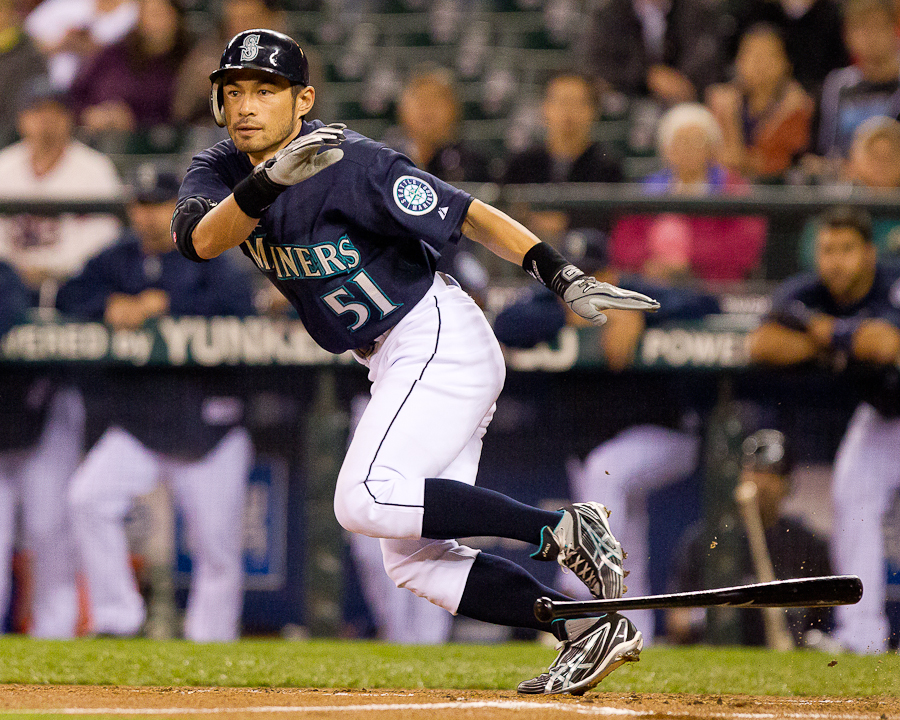
I have been fortunate to stay busy photographing the game I love, at all levels, including the Seattle Mariners and Ichiro Suzuki, at the MLB level.
I am apparently a rare breed here in Victoria, in that I REALLY, REALLY enjoy shooting baseball. Some of our local press photographers don’t like baseball assignments mainly because they have a limited time to shoot a game and always want the “big play” images to happen in the first inning – double plays at second, plays at the plate – plays that do NOT always happen early in a game, if at all, or at least by their deadline.
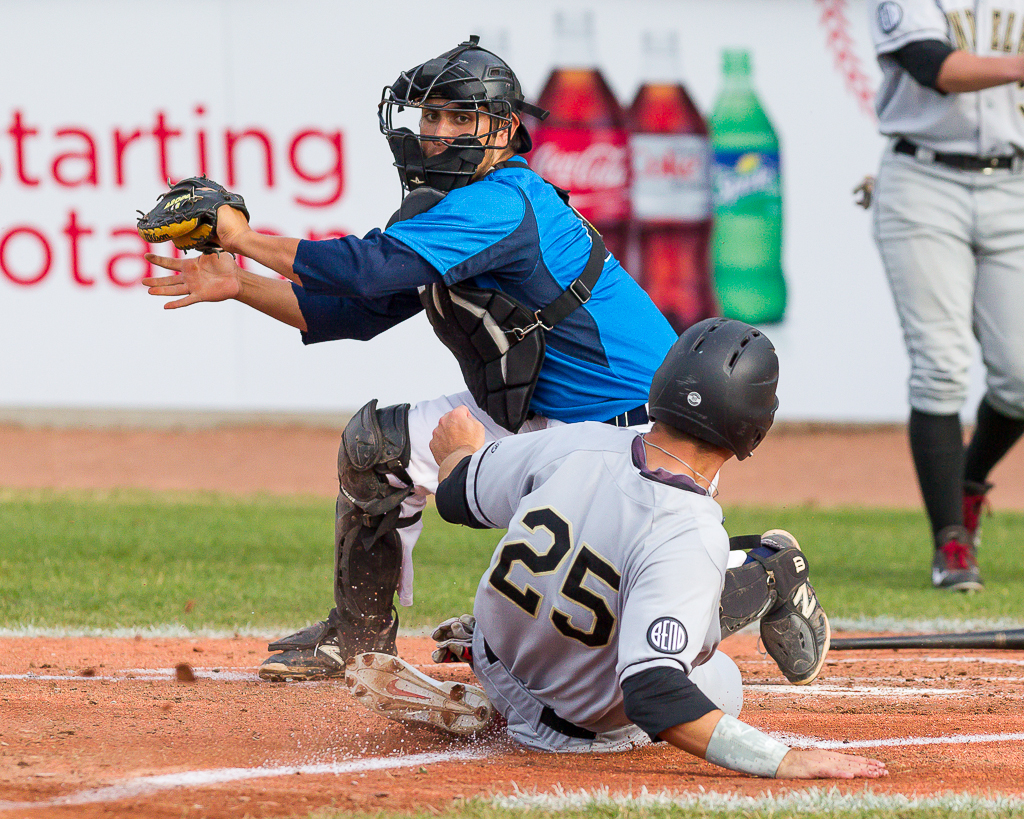
Plays at the plate can be relatively infrequent at most baseball games, but when they happen you need to be ready for them.
I tell them that shooting baseball is a lot like fishing….you sit quietly and patiently for long periods of time, waiting for that big nibble, or the fish to take your line, and when it does, you have to be ready to reel it in (i.e. snap away and capture the big play) before it is gone. Sometimes those nibbles come early and rapidly, sometimes they don’t come at all.
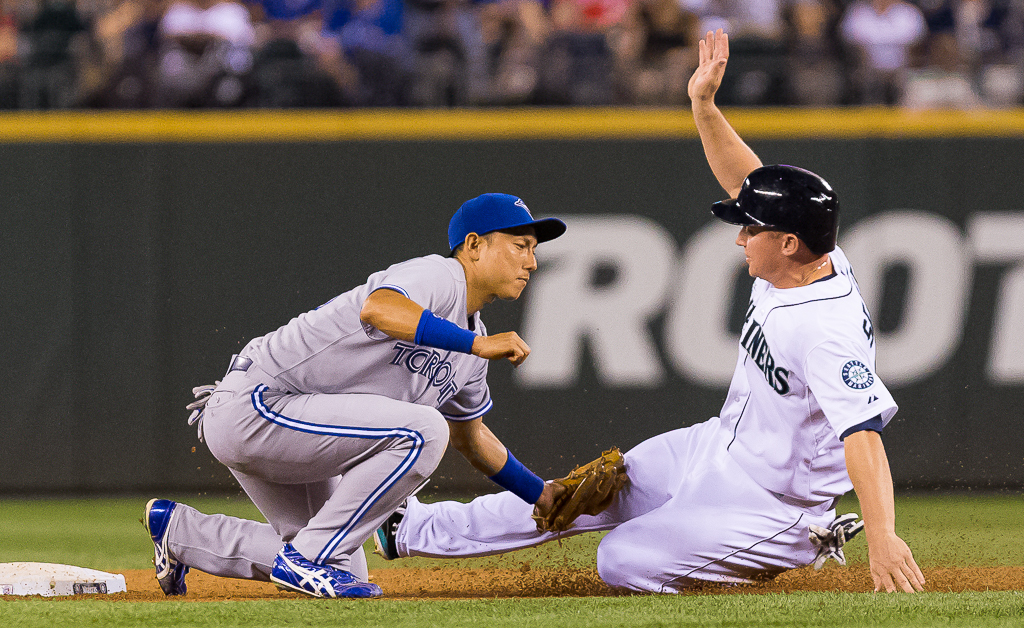
When plays at bases happen in baseball, be ready for them so you can land a nice “catch”
Fortunately, I like fishing, and with most of the work I do with the HarbourCats or with other on-line media agencies, we rarely have to worry about hard print deadlines and can stay for the full length of most games, allowing for more time to catch that big fish, and capture a key image or series of images from a particular game.
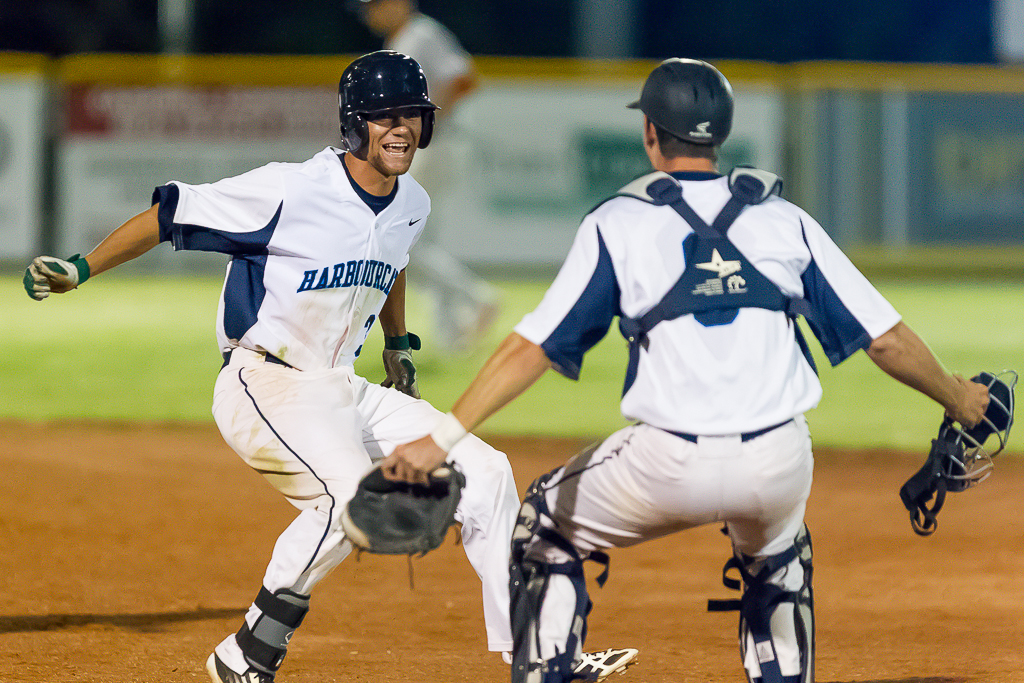
Sometimes the best image of the game happens on the very last play, like this example of a celebration after a walk-off base hit won the game.
And just like an expert fisherman who knows where and when to get the big fish, anticipating and understanding when that big play is going to happen in a baseball game is key.
While sometimes it can be obvious, I find that because I have played and coached the game, and am a connoisseur of baseball’s finer points, there are times when I can anticipate what is going to happen and set myself up for a better angle and photo.
For example, knowing a bunt situation and turning to photograph the player bunting, or knowing a certain batter’s tendencies and focusing on a fielder that he has a high percentage of hitting the ball to.
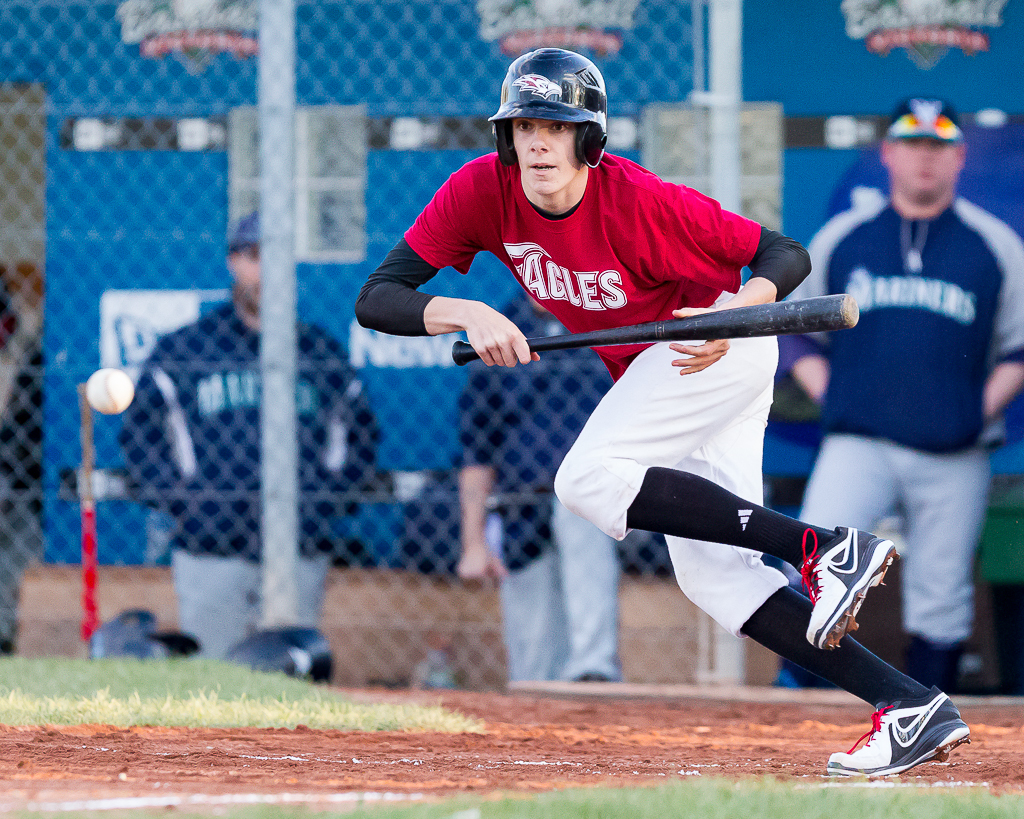
Knowing when a player might be called upon to bunt can often lead to nice photos of the play if executed.
This latter example worked out well for me in the image of the diving third baseman shown below. Three previous batters, including the guy at the plate this time, had all earlier scorched line drives down the line. So this time around, I focused on the third baseman and sure enough, the same batter hit another down the line and I captured the resulting image.
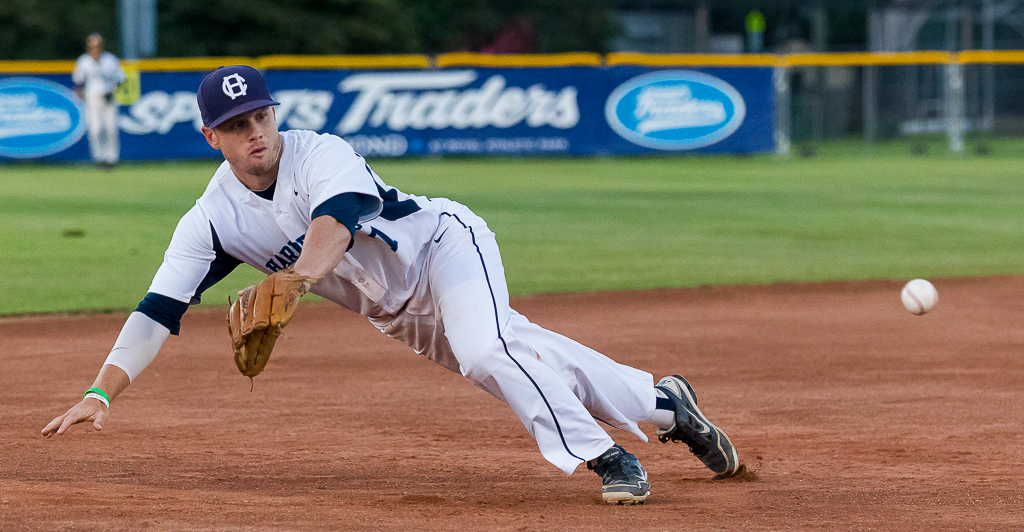
With a little knowledge of a batter’s tendencies and a pre-focus on an infielder, you can capture shots like this.
Or stealing signs from coaches or infielders and being in position (with my lens) to capture a pick-off attempt or a player stealing a base.
Plays at second are also big on a baseball photographer’s hit list, especially when a shortstop or second baseman attempts to turn a double play in the face of a sliding runner. Ideally you want to capture this from the first base side, with the defensive player leaping over the sliding runner and at the same time releasing the ball toward first. Of course, given how infrequently double plays happen (well at least at the level of games I have been covering) and when they do, the fact that sometimes you are on the third base side, capturing such an iconic image can be difficult.
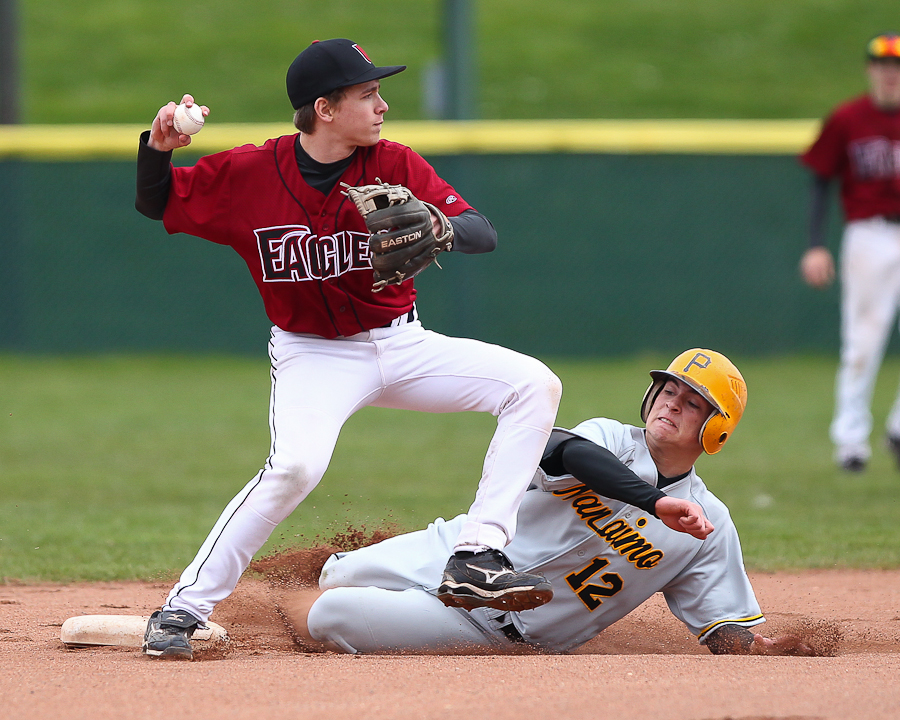
Quite often you can be on the third base side when a double play attempt at second base happens but with a little luck and the right timing, you can get acceptable results.
Fortunately for me, one time when covering the Blue Jays at Seattle a few years back, the “perfect storm” occurred in the very last game I shot of the three-game series, and I got TWO such images in the same game, the second of which (below), is probably the best such photo of this type of play that I have ever captured!
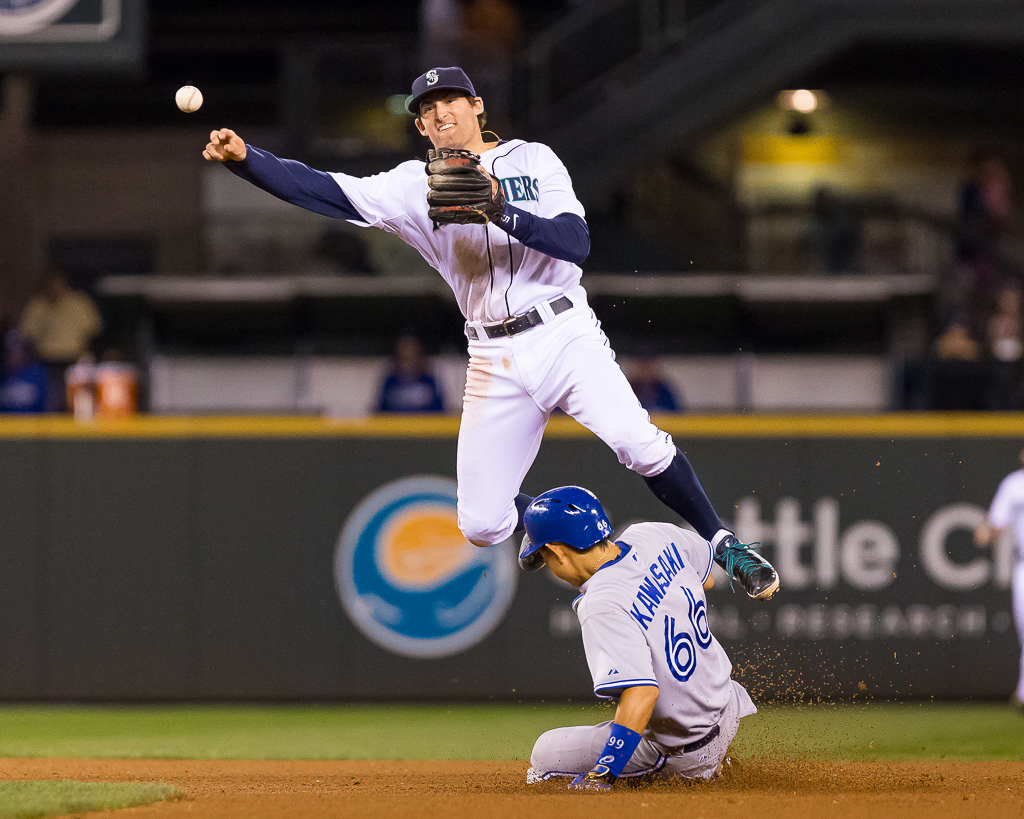
One of my best double play images ever, came in the very last game of a three game series in Seattle, showing how rare the “perfect” double-play photo can be and illustrating the patience one has to have when shooting baseball.
In lieu of the big plays, one often has to resort to other ways to capture images that make the game interesting for the readers and viewers of the images. One way I like to do this is by using close-up shots of, for example, pitchers as they deliver the ball to the plate. With the right lighting and background, these can be very powerful images, especially if that pitcher ends up throwing a good game.
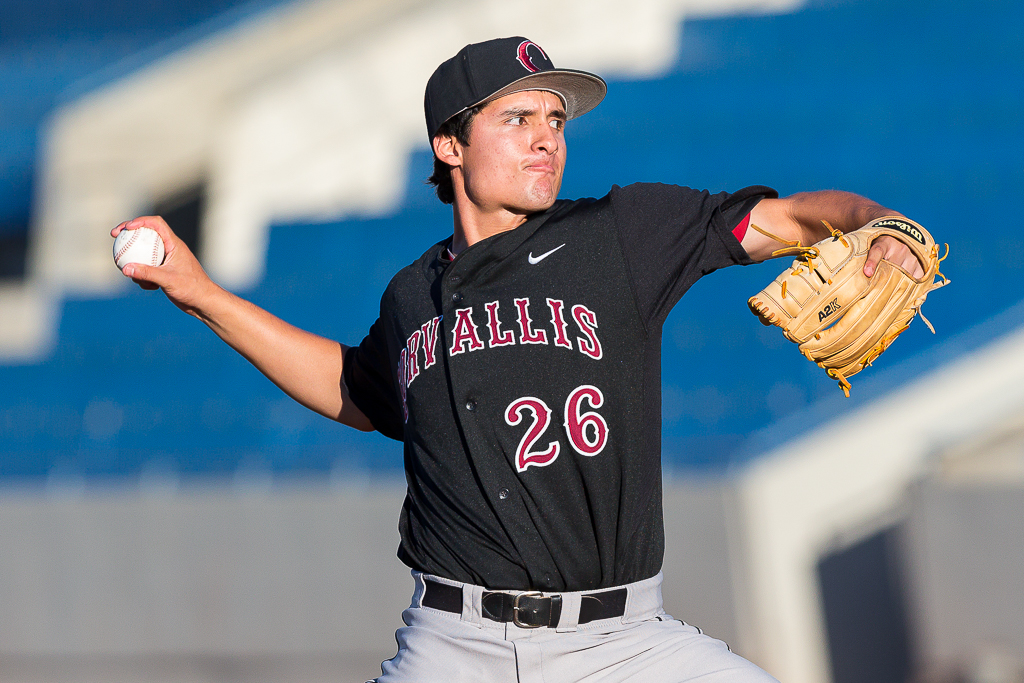
With the right lighting and background, close-up shots of pitchers like this can be quite dramatic.
Another good sight line I like is from behind the plate. Either a close up that really captures the exertion on a pitcher’s face, or in the case of the first photo below, the stress on his arm, or in the case of the second photo below, shooting a bit wider to give the viewer more context for the game and situation.
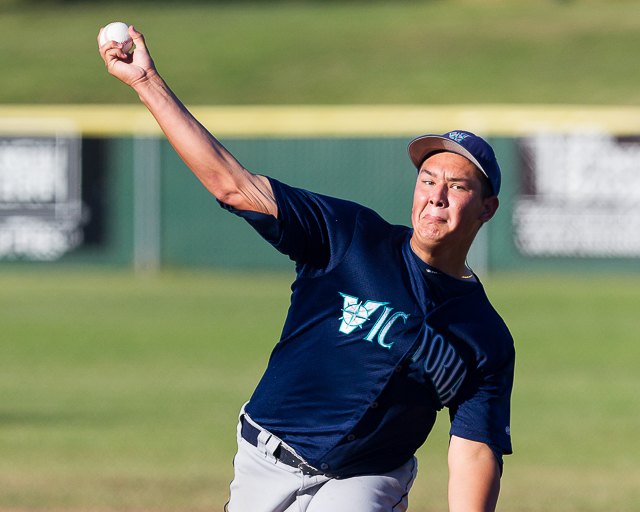
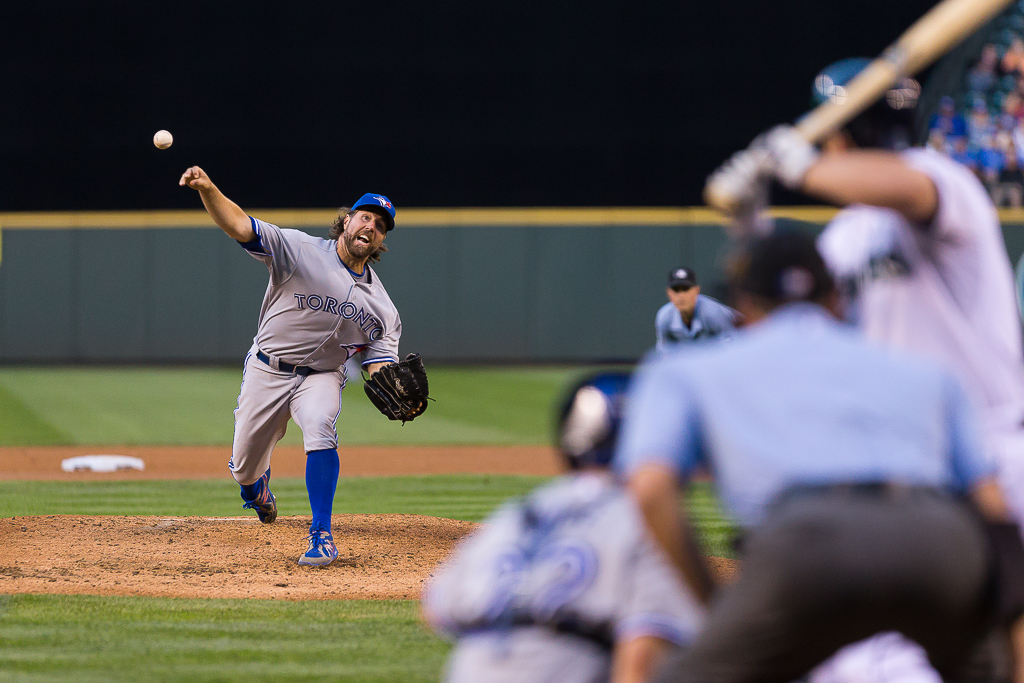
Shooting pitchers from behind the plate in a close-up mode can really emphasize their effort and exertion (top) while shooting a bit wider (below) can add more context to the situation.
Capturing shots of batters is always another dilemma for baseball photographers. Many like to capture the batter at the time of impact, when the ball hits the bat. These are called BOB (bat on ball) shots and many photographers seem overly elated to get them, but for me, I don’t like them because in most instances you don’t see the face of the batter.
My preference is to capture the batter as he comes out of his swing and his eyes begin to follow the ball as he follows through on his swing and begins to move toward first base. Most times, such shots are best from the third base side, photographing right handed batters who pull the ball, but lefties from this side will also work well. Cropping closely in post (like the Jose Bautista shot below) is another way to add variety to the shot.
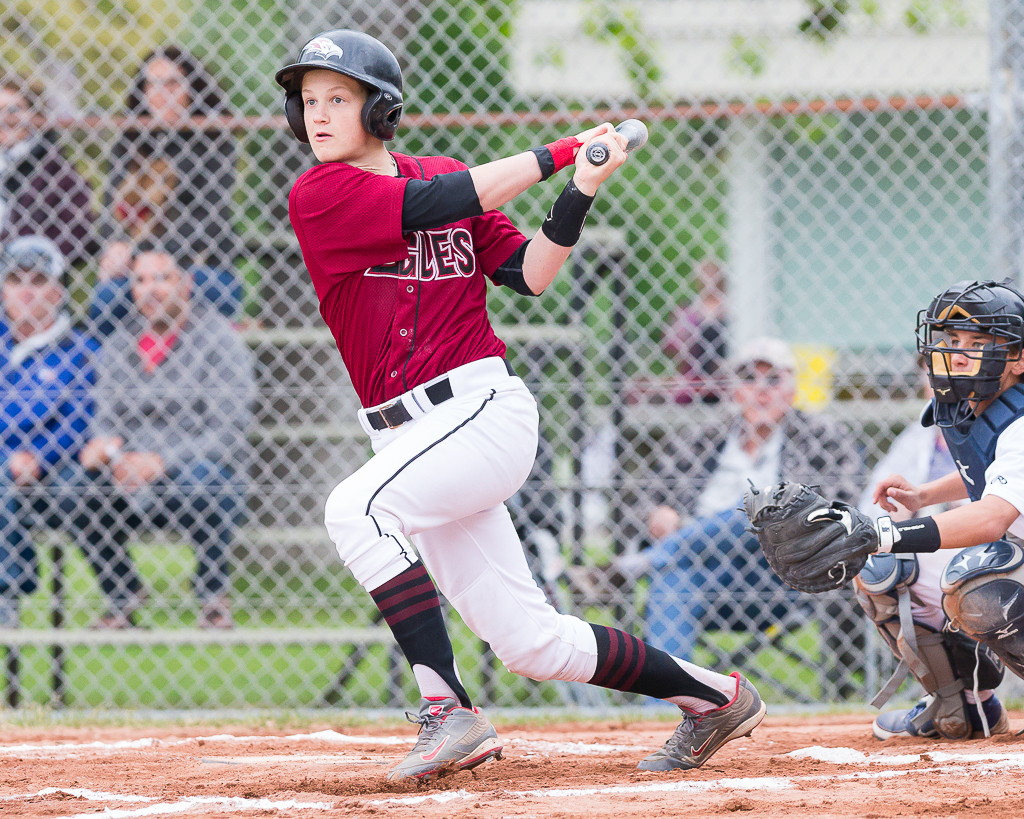
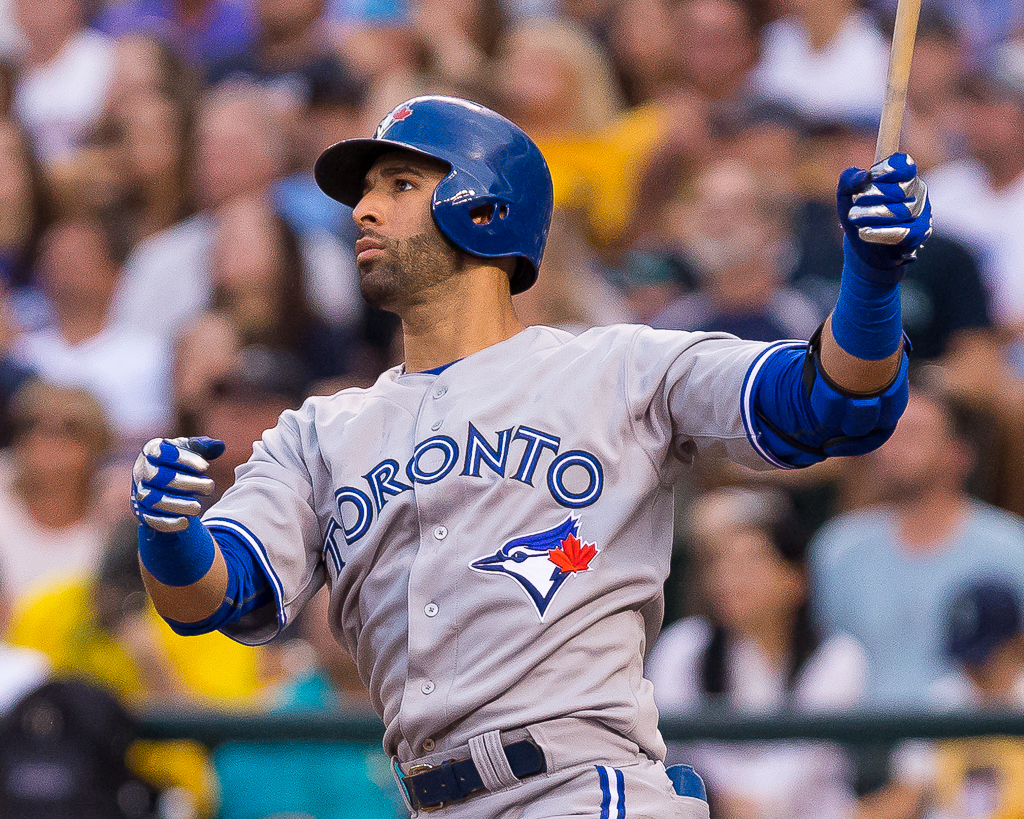
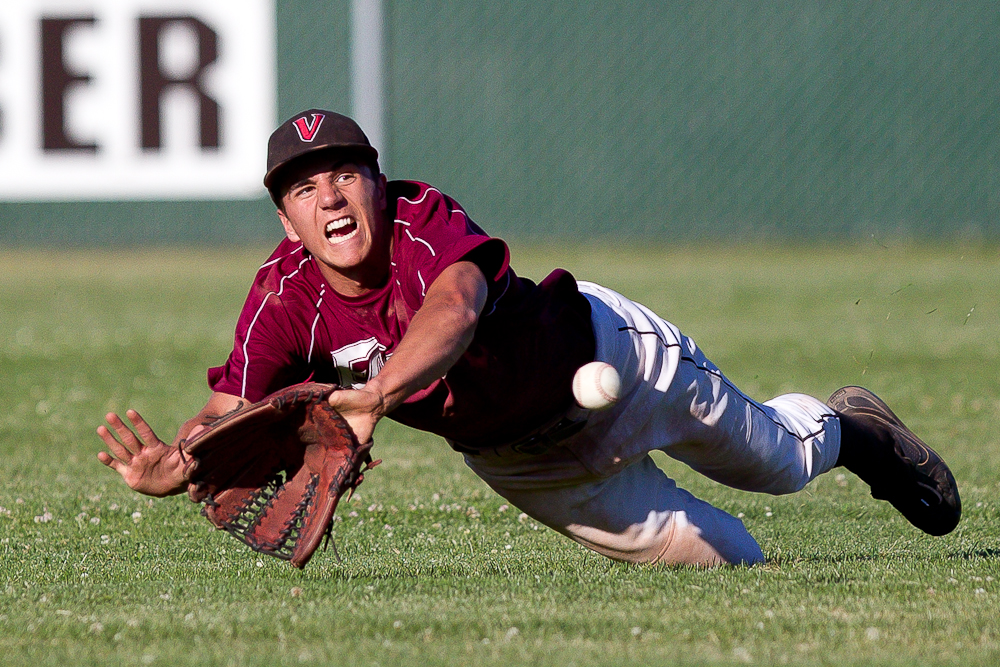
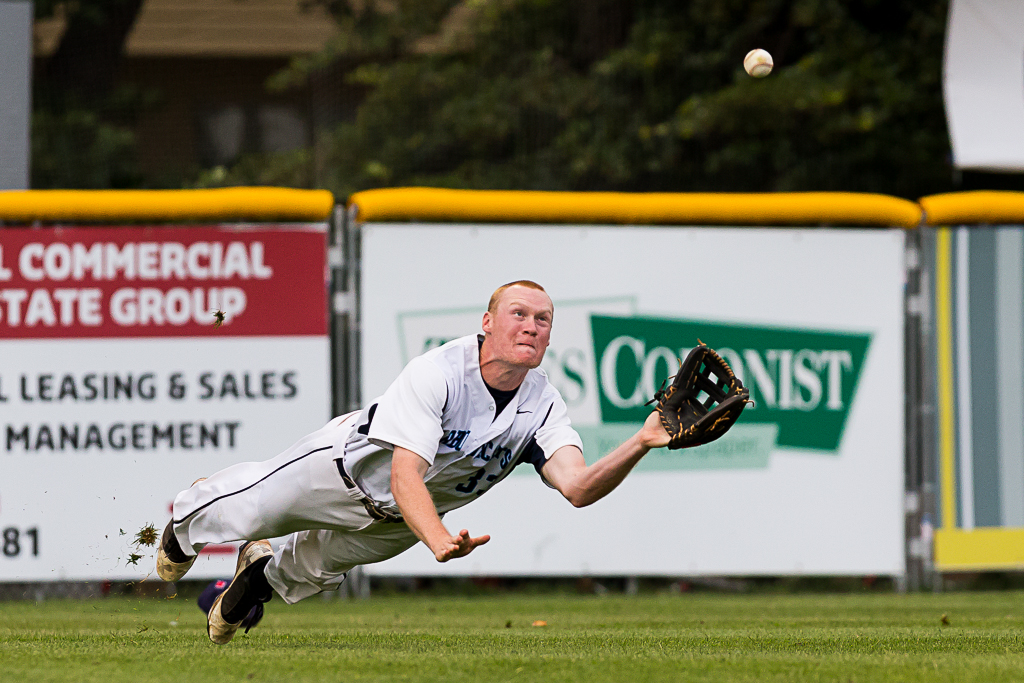
Outfielders are another challenge for baseball photographers and often get ignored, unless you are using a fairly long telephoto lens and are specifically shooting them. Fortunately, there are times when turning to shoot an outfielder works out OK, especially if you are using a newer camera with sufficient megapixels on the sensor to allow close cropping of the image in post-processing. The images below are such examples and can be nice catches (pun intended) if you get them!
Finally, sometimes the biggest fish can be caught off the field of play. Look for shots of fans or other promotions happening during the game that can make compelling, interesting or just plain weird photos. Depending on the game and the level of action, these may be the best images of the evening, so try not to ignore them!
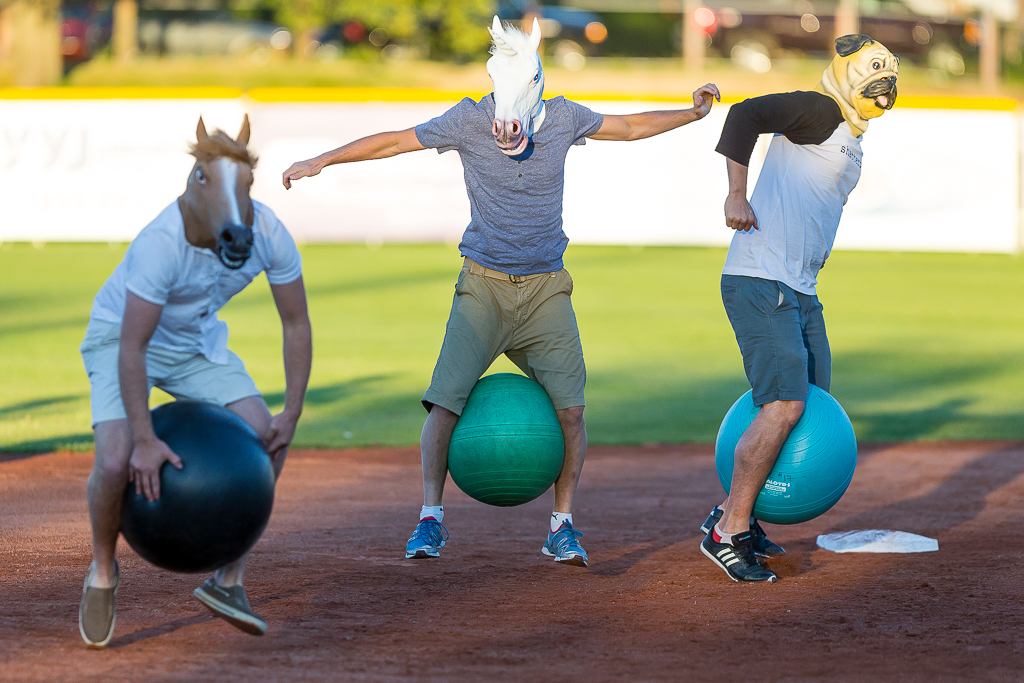
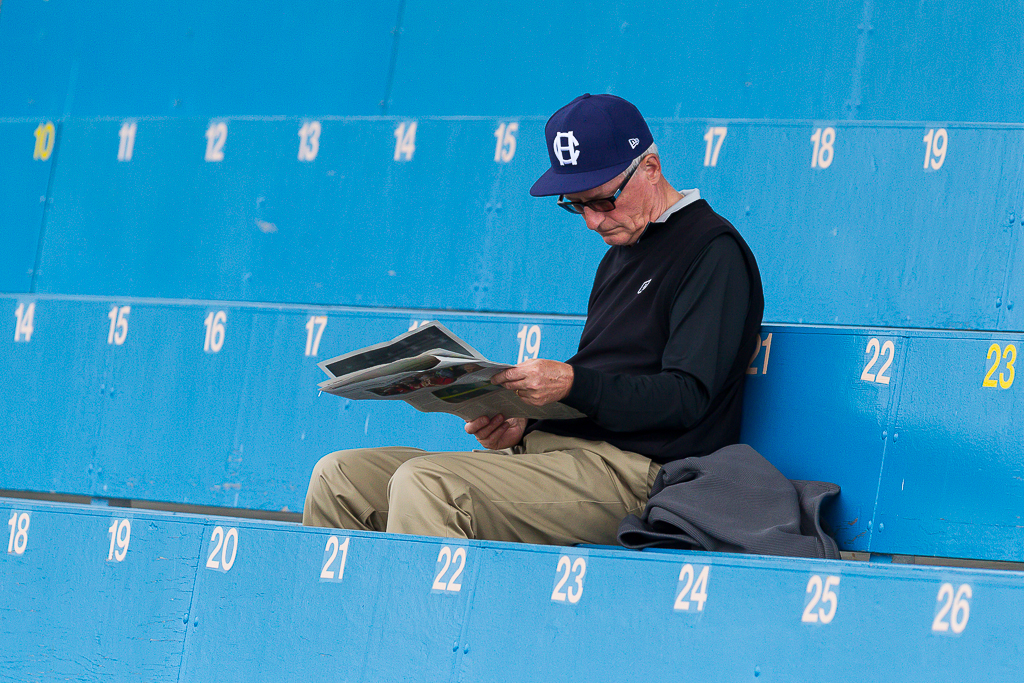
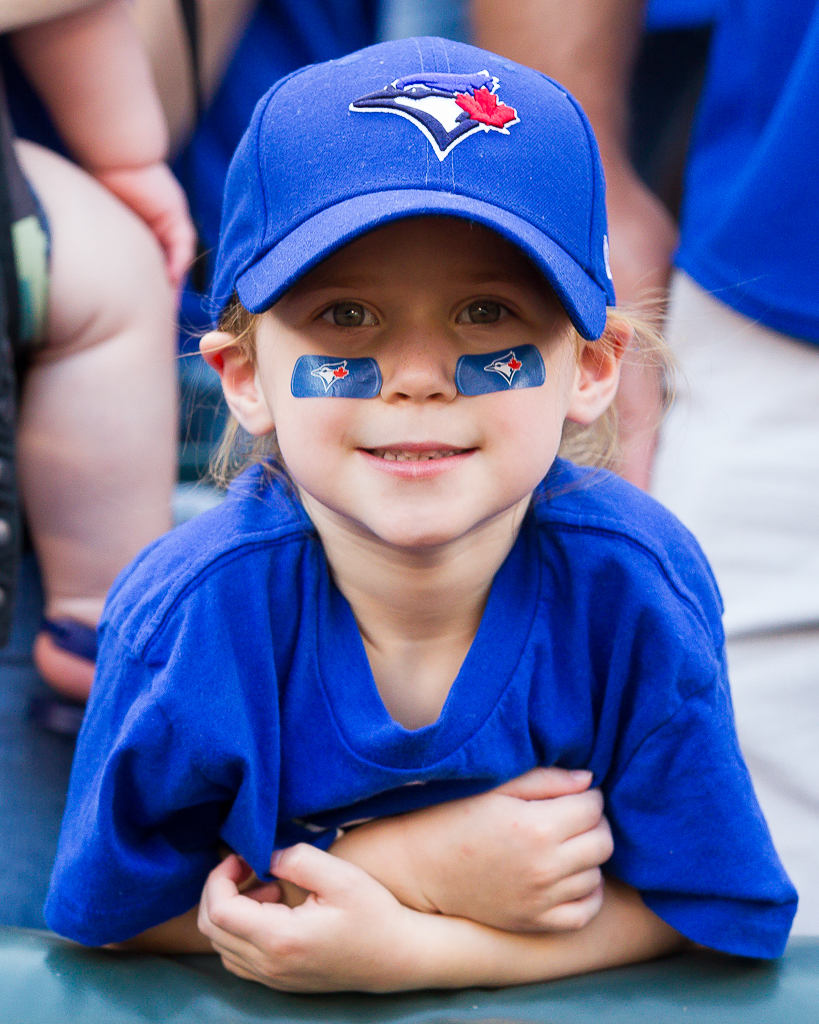
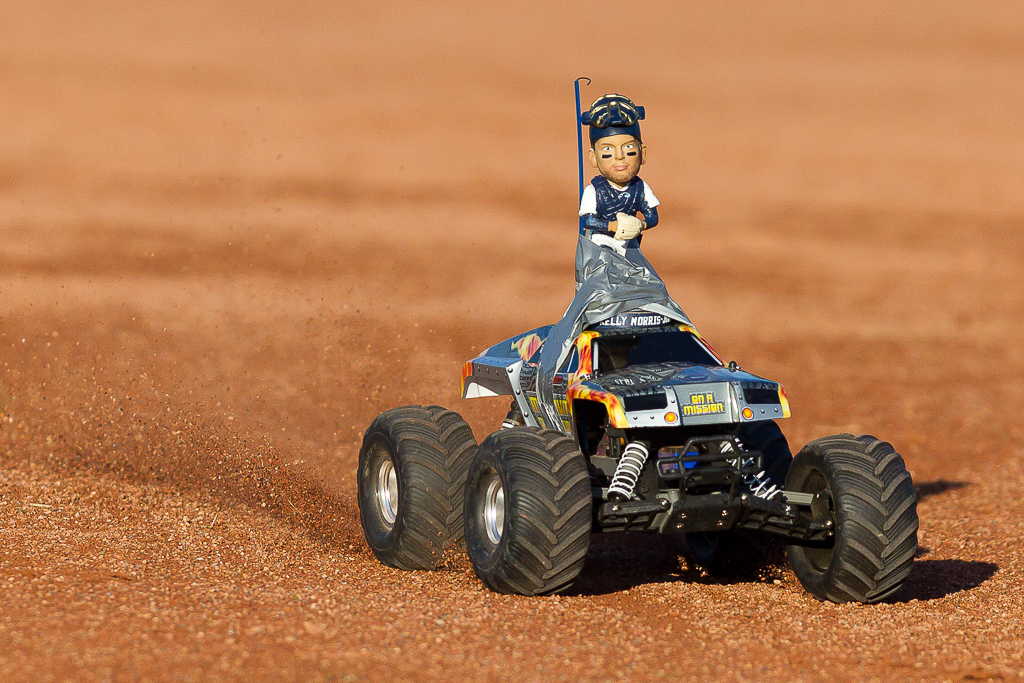
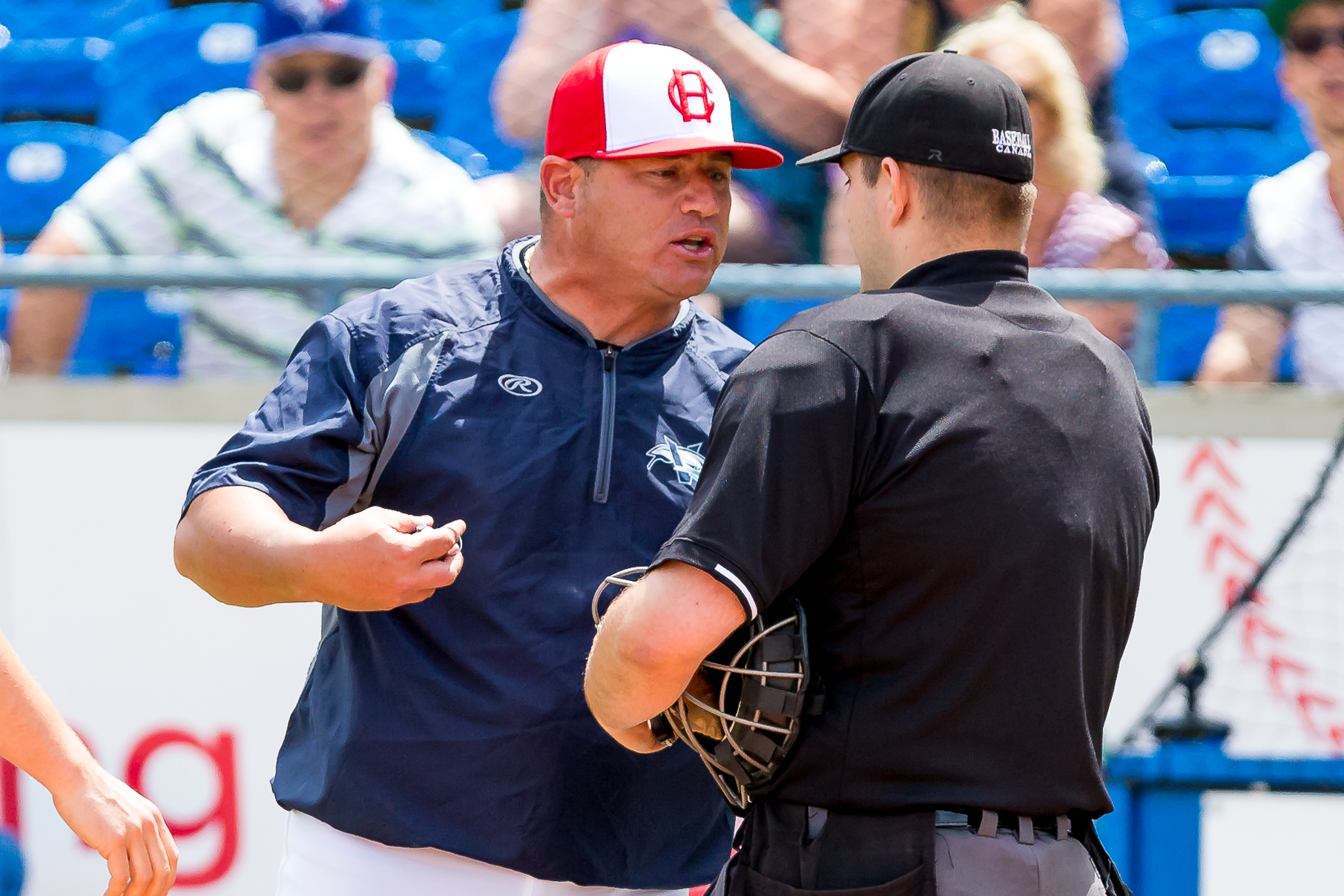
And when in doubt, if there is ever a coach – umpire argument, be sure to capture it! They can be priceless!
More of Christian J. Stewart’s baseball photography can be found at: https://christianjstewart.zenfolio.com/baseball







April 21, 2026
VICTORIA, B.C. — Practical power, provided — thanks to Emery Electric.
The Victoria HarbourCats are proud to recognize local company Emery Electric, a proud local business founded in 1930 by Ernie Emery and now overseen by Derek Emery.
What is this recognition all about? Well, working with the HarbourCats and the City of Victoria, Emery Electric has provided a major power upgrade to what is known during the baseball season as Wilson’s Group Stadium at Royal Athletic Park — one that brings significant environmental improvements.
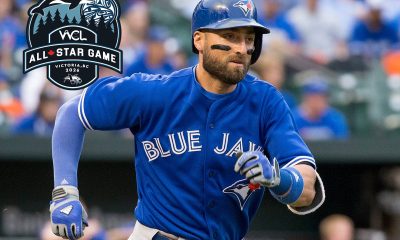
Emery Electric will be a key part of the HarbourCats season, helping to highlight “Emery Electric electric plays” by the home team, and the WCL All-Star Game Festival’s home run derby, featuring former Blue Jays star outfielder Kevin Pillar, will be referred to as “Powered by Emery Electric.”
“What was completed by Emery Electric earlier this year is a significant piece of quality work and infrastructure improvement we are proud to have put in place — and it will bring enhanced service capacity to all who use the City-owned facility,” said Jim Swanson, Managing Partner of the HarbourCats. “There should be no more brown-outs in that area. Derek and his staff are so community-minded, it’s hard to describe.
“We can’t yell ‘THANK YOU’ loud enough. It’s a big addition for the City, no cost to taxpayers, and we are proud to help contribute.”
In short, the work will provide power for the equivalent of four food trucks along Caledonia Avenue — a cabinet housing 4x30amp, 120/208 volt, and 4x15amp, 120 volt was installed in the off-season. That means generators and various fuels, and the associated hum of the engines, can be removed from the park (gas and diesel prices these days, anyone?).
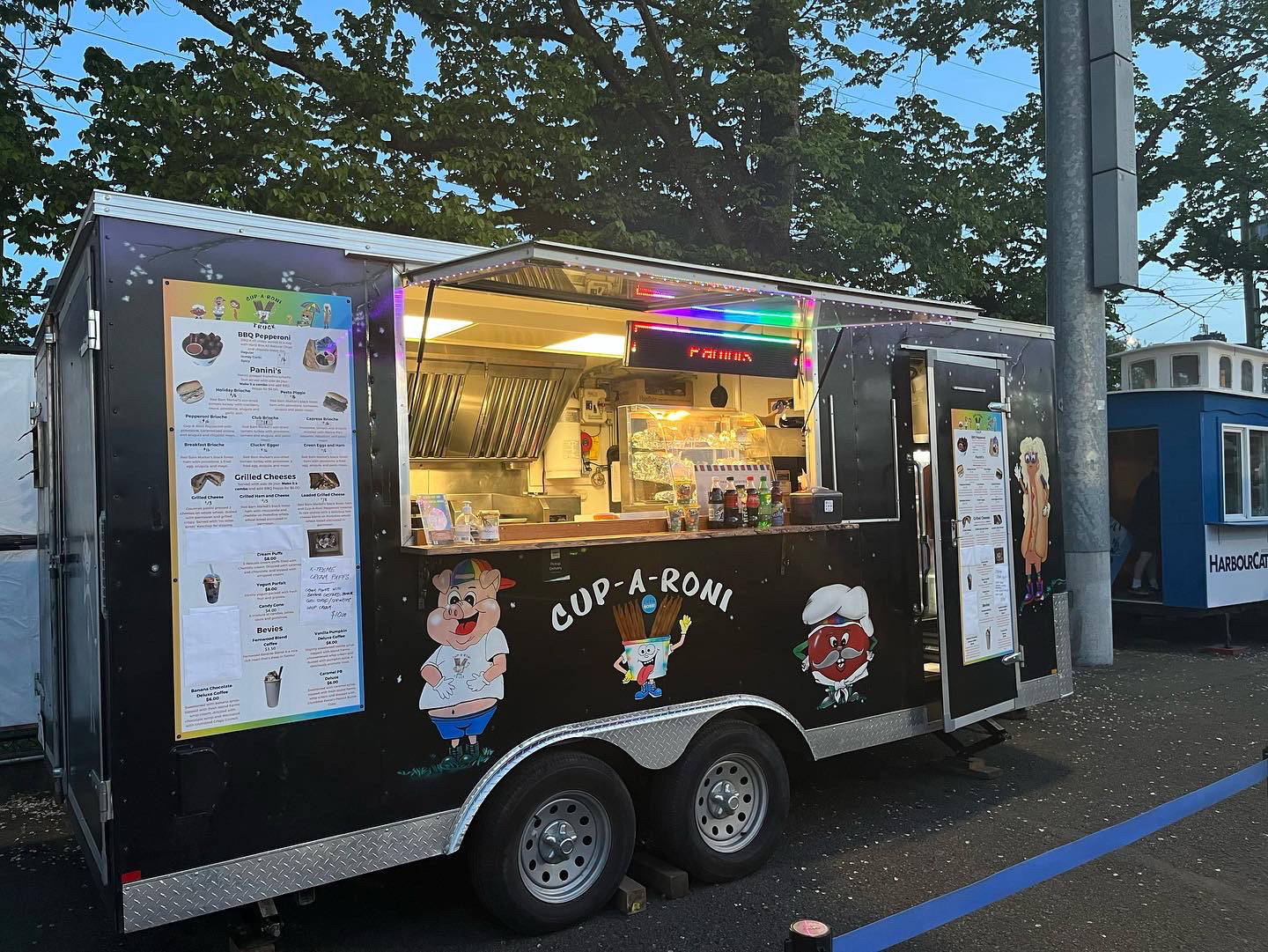
Cup-A-Roni is one of many food trucks operating during HarbourCats games that will benefit from the power upgrades installed during the off season.
Emery Electric is nearing 100 years of serving Victoria and indeed all of Vancouver Island in commercial, industrial and marine electrical contracting.
The HarbourCats have been the main user of Royal Athletic Park since 2013, the longest continuous single user group in the history of the facility, which opened in May of 1908. The HarbourCats have contributed many improvements including dressing room upgrades, the movable fence, and enhanced seating areas, all with no taxpayer burden.
The HarbourCats begin their 2026 season on May 29th with a visit to Portland and then return to Victoria for the Home Opener against the Edmonton Riverhawks on Tuesday, June 2, 6:30 pm.
Season tickets, single-game tickets, 12 and 32-game flex packs are now on sale at harbourcats.com/tickets or at the HarbourCats office at 1814 Vancouver Street.
Tickets for the All-Star Home Run Derby on July 14th are currently available in a package that also include tickets for the WCL All Star Game that will be held on Wednesday, July 15th and feature the top players in the league. Prices for the package start at $40 for General Admission seats to $85 for field level Diamond Club Seats, and can be purchased ON-LINE, or by visiting the HarbourCats office at 101-1814 Vancouver Street, just around the corner from the stadium.
Summer Collegiate
Nanaimo NightOwls unveil VIDEOBOARD, elevating game-day experience at Serauxmen Stadium



The Nanaimo NightOwls are raising the bar for fan engagement with the introduction of a brand-new videoboard ahead of the club’s highly anticipated fifth West Coast League season.
This major addition to historic Serauxmen Stadium will transform the in-game experience, delivering dynamic replays, interactive features, contests, live broadcast integration, and enhanced entertainment that brings fans closer to the action than ever before.
The videoboard is being delivered in partnership with Chris Jaycox Productions, led by Chris Jaycox — the creative force behind the NightOwls’ live streaming broadcast seen on www.NightOwls.TV
His team will oversee both production and execution, ensuring a seamless and high-quality experience from first pitch to final out.
“I’m excited to be part of such a great team and to help bring another level to the in-game experience for fans,” said Jaycox. “The videoboard will create new energy in the ballpark, featuring interactive promos, replays, contests, and the live broadcast, and really accentuate every moment of the NightOwls experience.”
The installation has been made possible thanks to the unwavering support of anchor sponsor Chinook Scaffolding, a stellar Island company whose contribution has been instrumental in bringing the project to life.
The NightOwls also extend sincere thanks to the City of Nanaimo for its collaboration and commitment to helping turn this vision into reality.
“This is a defining step forward for our organization and our fans,” said Tina Baker-Cornett, General Manager of the Nanaimo NightOwls. “We’re always looking for ways to elevate the experience at the ballpark, and this videoboard allows us to create something more immersive, more engaging, and more memorable for everyone who walks through our gates.”
Serauxmen Stadium, which opened 50 years ago, has never had a videoboard in its proud history.
The videoboard will make its debut on Opening Day of the NightOwls’ fifth WCL season on June 2, setting the stage for an exciting new era of baseball in Nanaimo.
Don’t miss out on the excitement as we raise the bar even higher!
Secure your Single Game, 10 Game Flex Passes, and limited Season Tickets now at
www.NanaimoNightOwls.com/ticketinfo


Victoria HarbourCats – HarbourCats announce 2026 A&W Summer Kids Camps

Victoria HarbourCats – Emery Electric powers HarbourCats, food trucks, and RAP

Nanaimo NightOwls unveil VIDEOBOARD, elevating game-day experience at Serauxmen Stadium



-
 Summer Collegiate2 weeks ago
Nanaimo NightOwls unveil VIDEOBOARD, elevating game-day experience at Serauxmen Stadium
-
Summer Collegiate2 weeks ago
Victoria HarbourCats – Emery Electric powers HarbourCats, food trucks, and RAP
-
Summer Collegiate3 days ago
Victoria HarbourCats – HarbourCats announce 2026 A&W Summer Kids Camps
Mike Berezowski
March 9, 2021 at 5:04 pm
Great article and photos — thanks for the tips!