

West Coast League
Photographing Baseball is A Lot Like Fishing

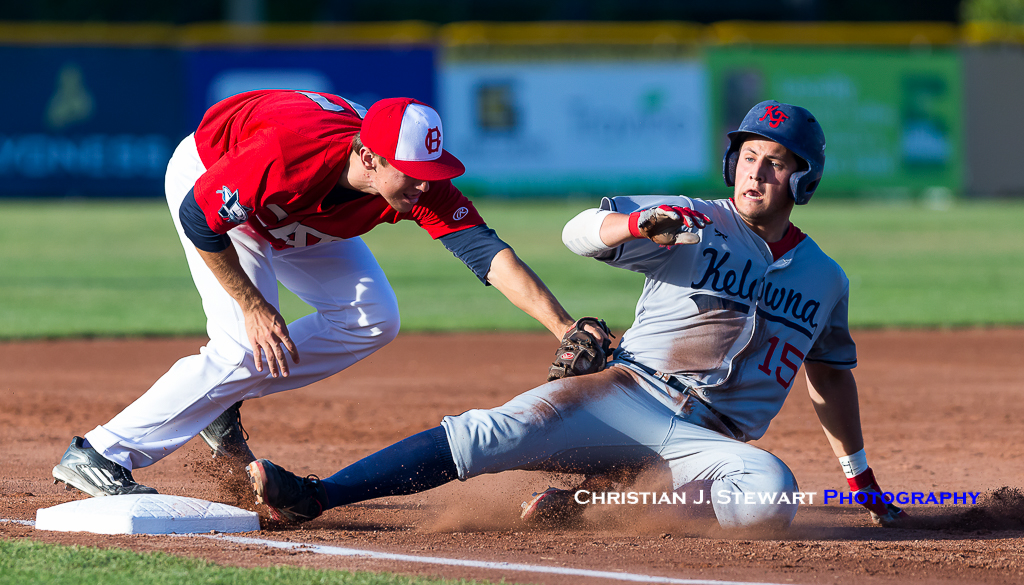
With very little baseball to go out and photograph over the course of the last year (thanks to COVID-19), it has been a good time for me to reflect on the games I have covered over the last 15 years – everything from house league T-Ball, Mosquito (9-10 year olds) right on up through elite high school leagues, to our summer collegiate team – the Victoria HarbourCats – to the 2017 World Junior Championships and finally to the MLB level, covering the Seattle Mariners at Safeco Field, as well as in Spring Training in Arizona.
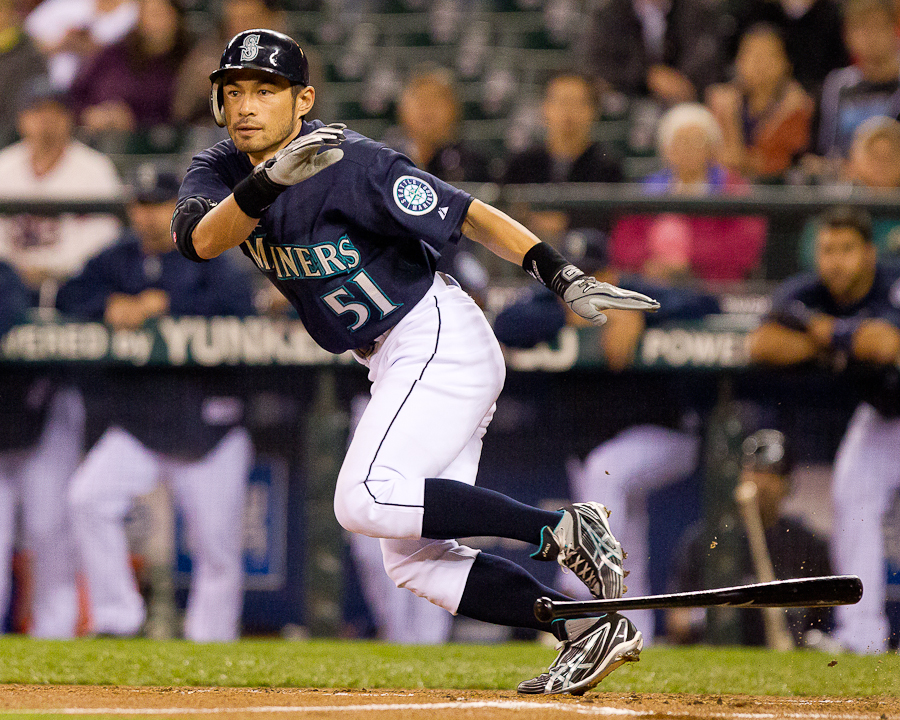
I have been fortunate to stay busy photographing the game I love, at all levels, including the Seattle Mariners and Ichiro Suzuki, at the MLB level.
I am apparently a rare breed here in Victoria, in that I REALLY, REALLY enjoy shooting baseball. Some of our local press photographers don’t like baseball assignments mainly because they have a limited time to shoot a game and always want the “big play” images to happen in the first inning – double plays at second, plays at the plate – plays that do NOT always happen early in a game, if at all, or at least by their deadline.
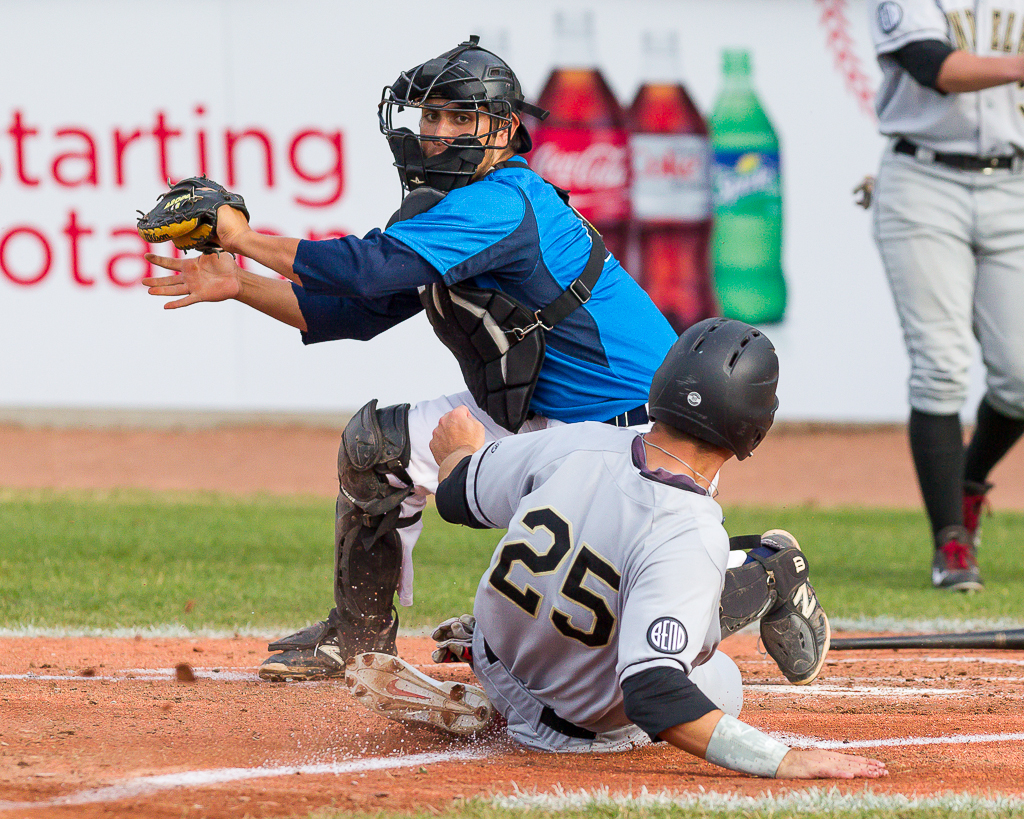
Plays at the plate can be relatively infrequent at most baseball games, but when they happen you need to be ready for them.
I tell them that shooting baseball is a lot like fishing….you sit quietly and patiently for long periods of time, waiting for that big nibble, or the fish to take your line, and when it does, you have to be ready to reel it in (i.e. snap away and capture the big play) before it is gone. Sometimes those nibbles come early and rapidly, sometimes they don’t come at all.
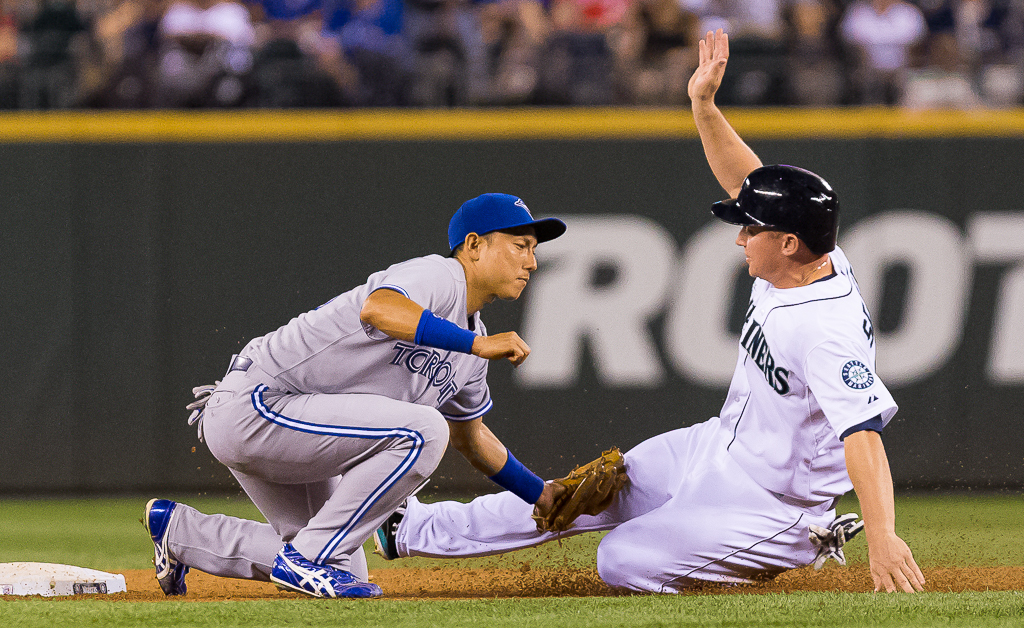
When plays at bases happen in baseball, be ready for them so you can land a nice “catch”
Fortunately, I like fishing, and with most of the work I do with the HarbourCats or with other on-line media agencies, we rarely have to worry about hard print deadlines and can stay for the full length of most games, allowing for more time to catch that big fish, and capture a key image or series of images from a particular game.
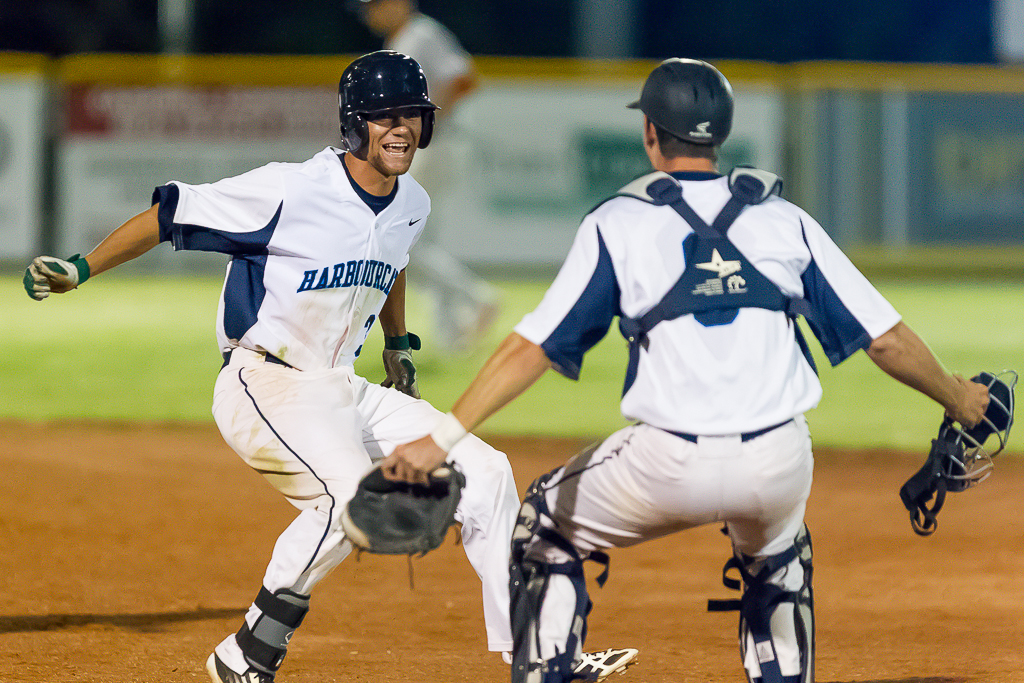
Sometimes the best image of the game happens on the very last play, like this example of a celebration after a walk-off base hit won the game.
And just like an expert fisherman who knows where and when to get the big fish, anticipating and understanding when that big play is going to happen in a baseball game is key.
While sometimes it can be obvious, I find that because I have played and coached the game, and am a connoisseur of baseball’s finer points, there are times when I can anticipate what is going to happen and set myself up for a better angle and photo.
For example, knowing a bunt situation and turning to photograph the player bunting, or knowing a certain batter’s tendencies and focusing on a fielder that he has a high percentage of hitting the ball to.
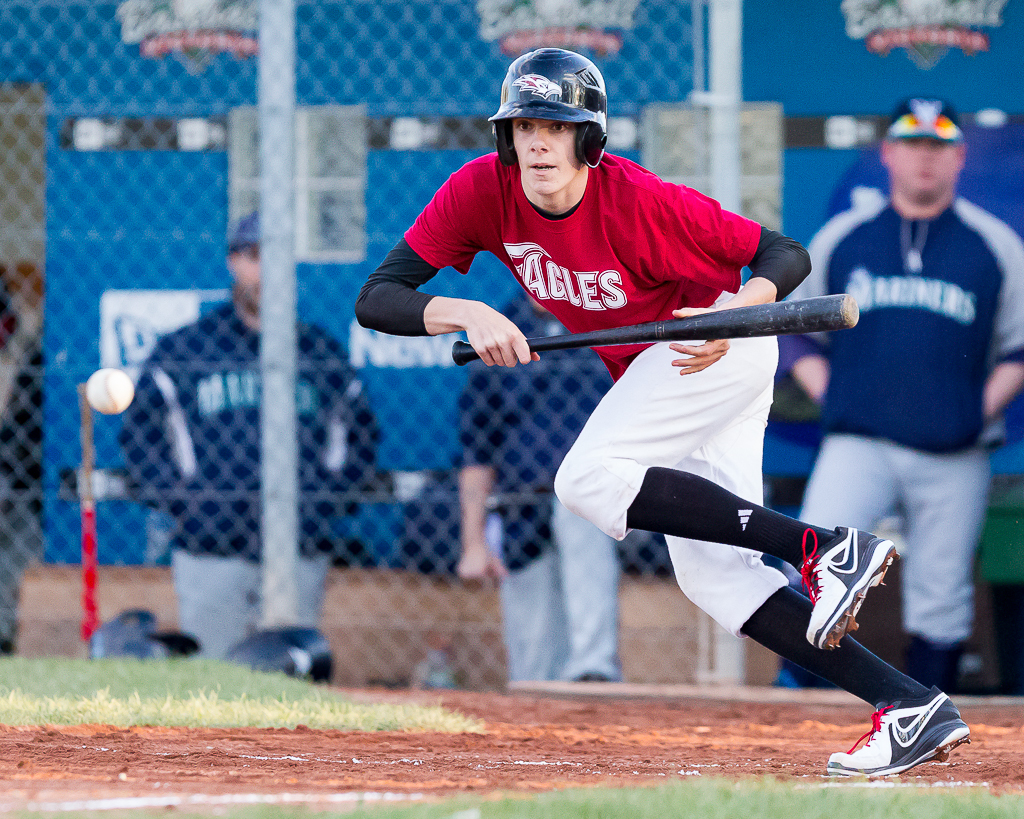
Knowing when a player might be called upon to bunt can often lead to nice photos of the play if executed.
This latter example worked out well for me in the image of the diving third baseman shown below. Three previous batters, including the guy at the plate this time, had all earlier scorched line drives down the line. So this time around, I focused on the third baseman and sure enough, the same batter hit another down the line and I captured the resulting image.
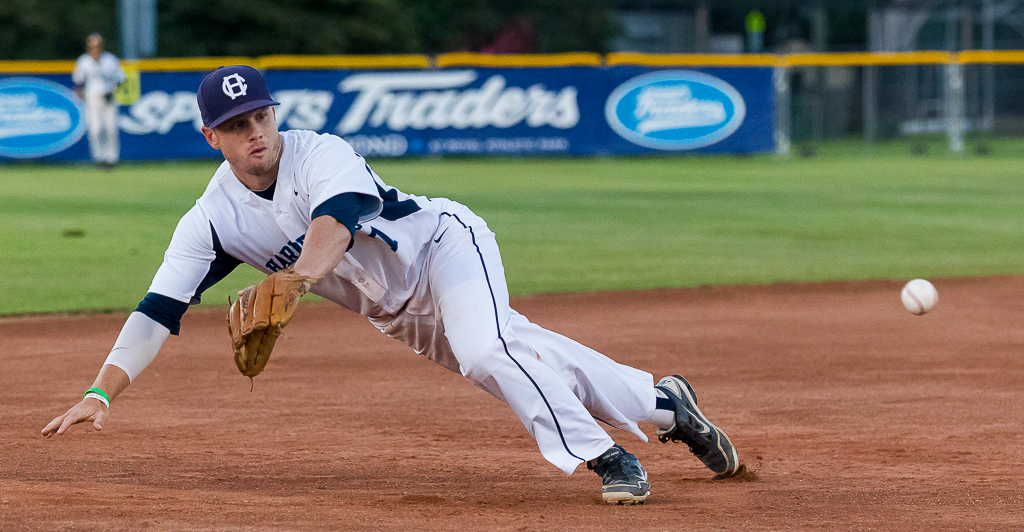
With a little knowledge of a batter’s tendencies and a pre-focus on an infielder, you can capture shots like this.
Or stealing signs from coaches or infielders and being in position (with my lens) to capture a pick-off attempt or a player stealing a base.
Plays at second are also big on a baseball photographer’s hit list, especially when a shortstop or second baseman attempts to turn a double play in the face of a sliding runner. Ideally you want to capture this from the first base side, with the defensive player leaping over the sliding runner and at the same time releasing the ball toward first. Of course, given how infrequently double plays happen (well at least at the level of games I have been covering) and when they do, the fact that sometimes you are on the third base side, capturing such an iconic image can be difficult.
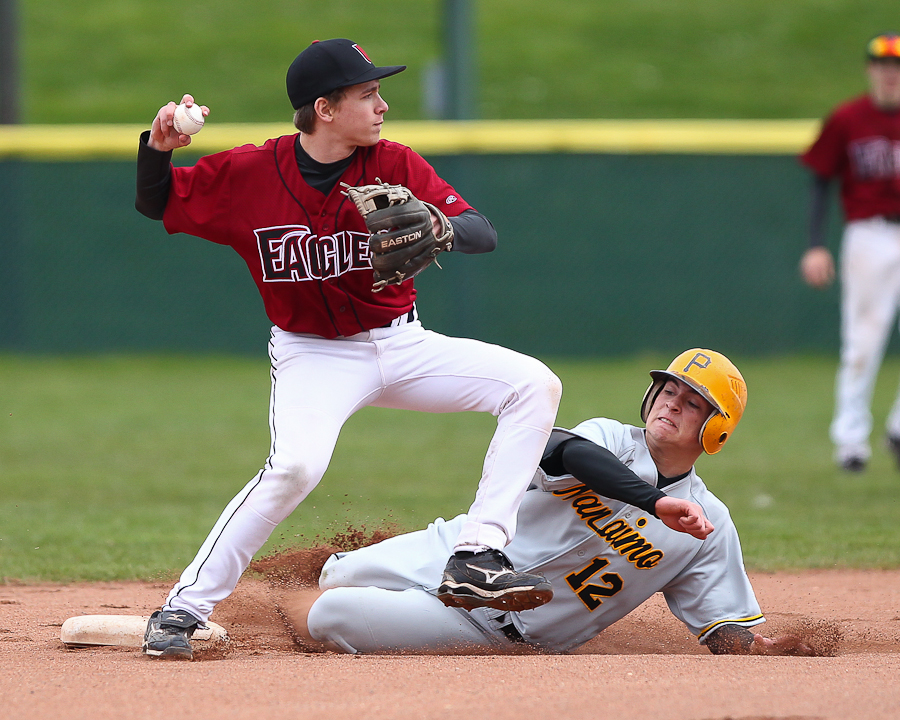
Quite often you can be on the third base side when a double play attempt at second base happens but with a little luck and the right timing, you can get acceptable results.
Fortunately for me, one time when covering the Blue Jays at Seattle a few years back, the “perfect storm” occurred in the very last game I shot of the three-game series, and I got TWO such images in the same game, the second of which (below), is probably the best such photo of this type of play that I have ever captured!
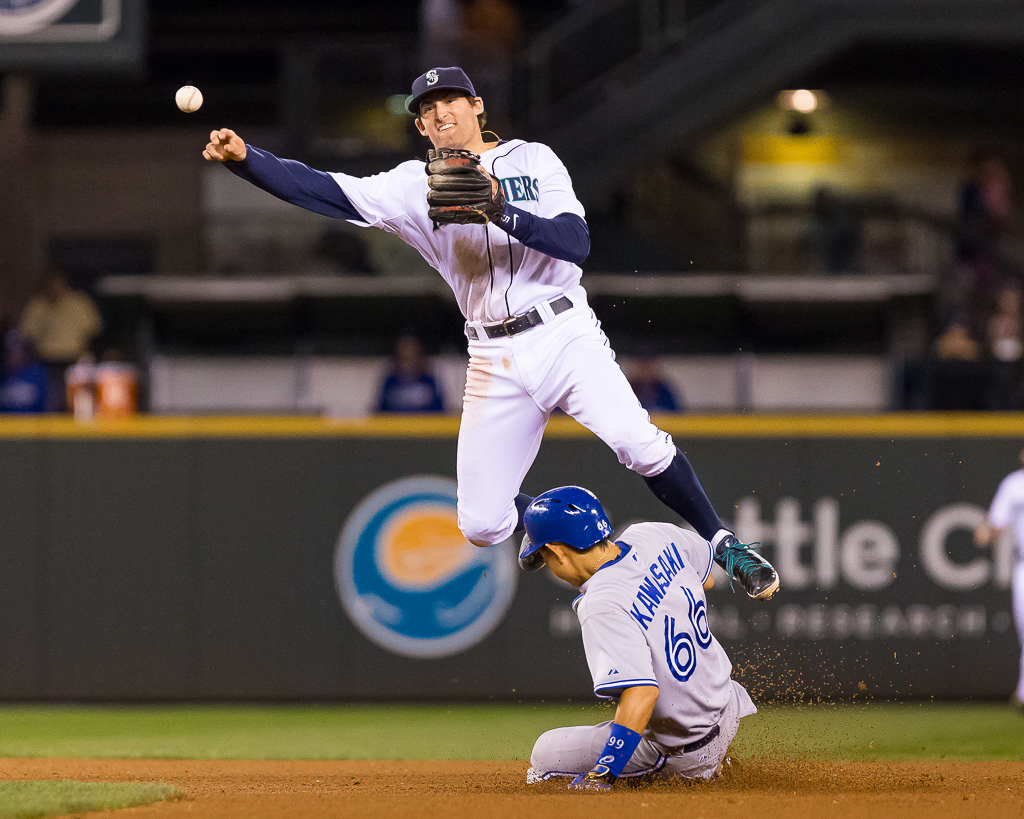
One of my best double play images ever, came in the very last game of a three game series in Seattle, showing how rare the “perfect” double-play photo can be and illustrating the patience one has to have when shooting baseball.
In lieu of the big plays, one often has to resort to other ways to capture images that make the game interesting for the readers and viewers of the images. One way I like to do this is by using close-up shots of, for example, pitchers as they deliver the ball to the plate. With the right lighting and background, these can be very powerful images, especially if that pitcher ends up throwing a good game.
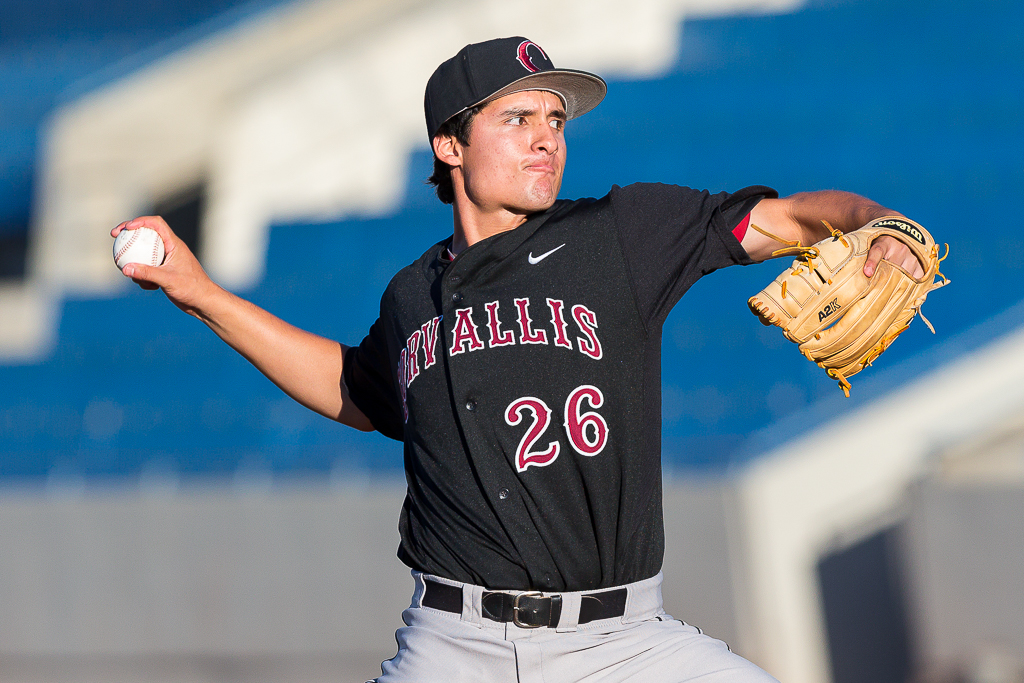
With the right lighting and background, close-up shots of pitchers like this can be quite dramatic.
Another good sight line I like is from behind the plate. Either a close up that really captures the exertion on a pitcher’s face, or in the case of the first photo below, the stress on his arm, or in the case of the second photo below, shooting a bit wider to give the viewer more context for the game and situation.
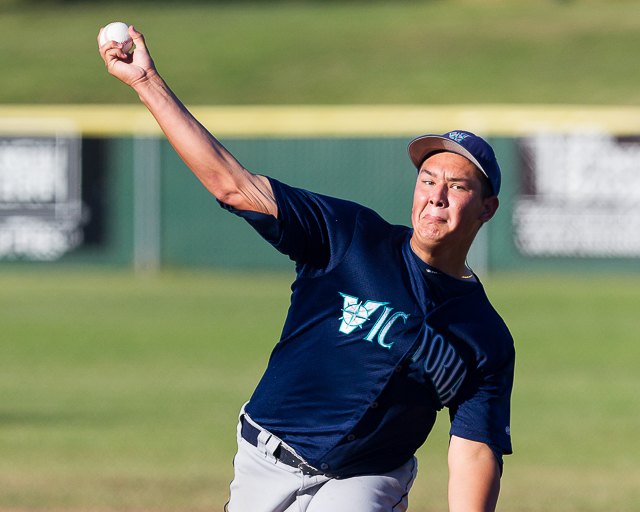
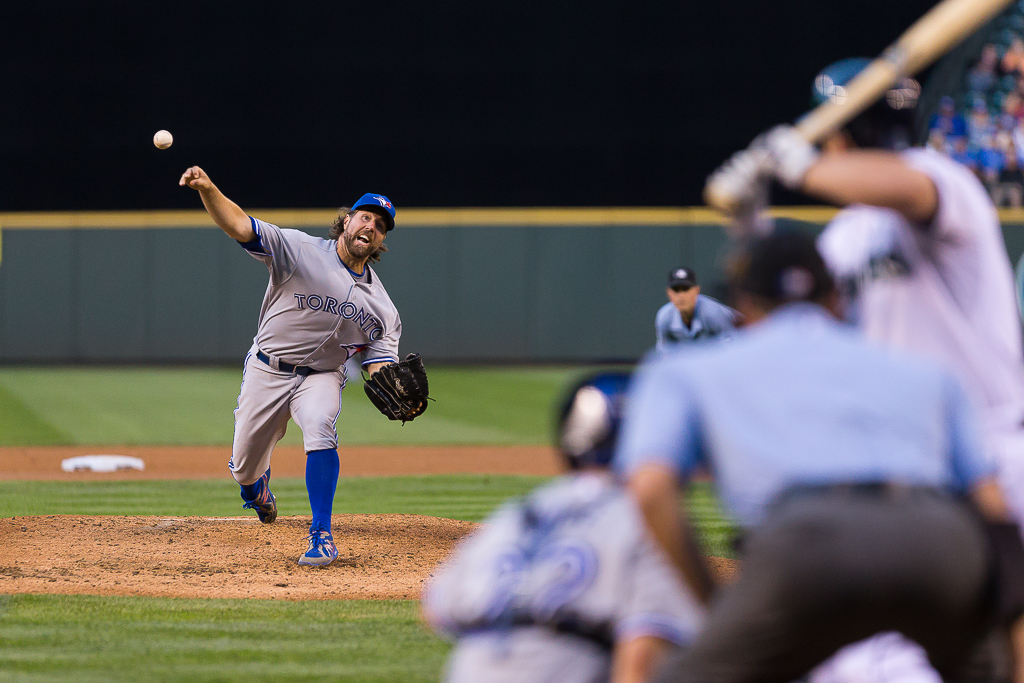
Shooting pitchers from behind the plate in a close-up mode can really emphasize their effort and exertion (top) while shooting a bit wider (below) can add more context to the situation.
Capturing shots of batters is always another dilemma for baseball photographers. Many like to capture the batter at the time of impact, when the ball hits the bat. These are called BOB (bat on ball) shots and many photographers seem overly elated to get them, but for me, I don’t like them because in most instances you don’t see the face of the batter.
My preference is to capture the batter as he comes out of his swing and his eyes begin to follow the ball as he follows through on his swing and begins to move toward first base. Most times, such shots are best from the third base side, photographing right handed batters who pull the ball, but lefties from this side will also work well. Cropping closely in post (like the Jose Bautista shot below) is another way to add variety to the shot.
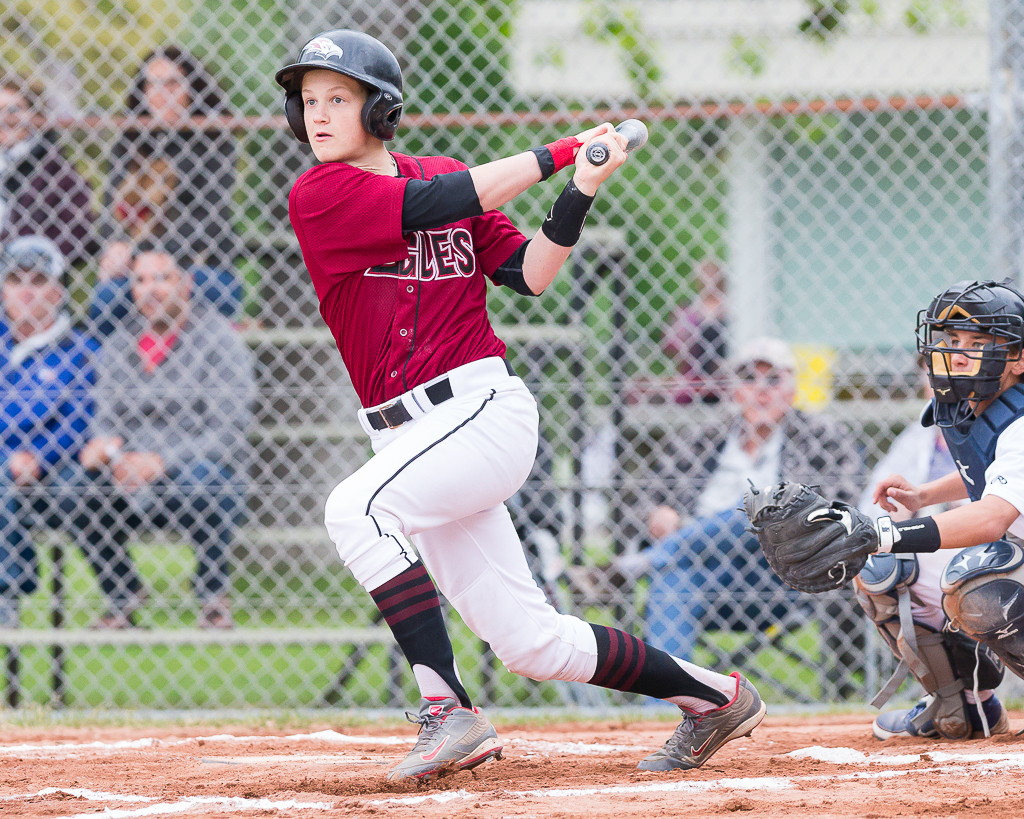
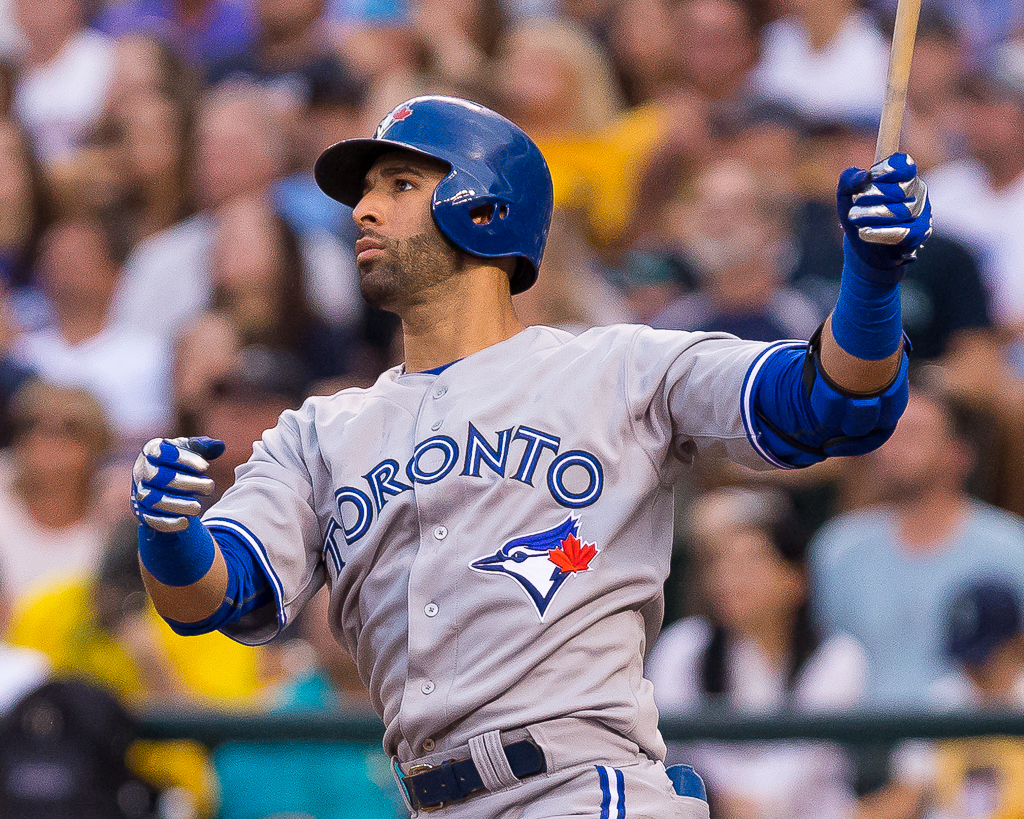
Outfielders are another challenge for baseball photographers and often get ignored, unless you are using a fairly long telephoto lens and are specifically shooting them. Fortunately, there are times when turning to shoot an outfielder works out OK, especially if you are using a newer camera with sufficient megapixels on the sensor to allow close cropping of the image in post-processing. The images below are such examples and can be nice catches (pun intended) if you get them!
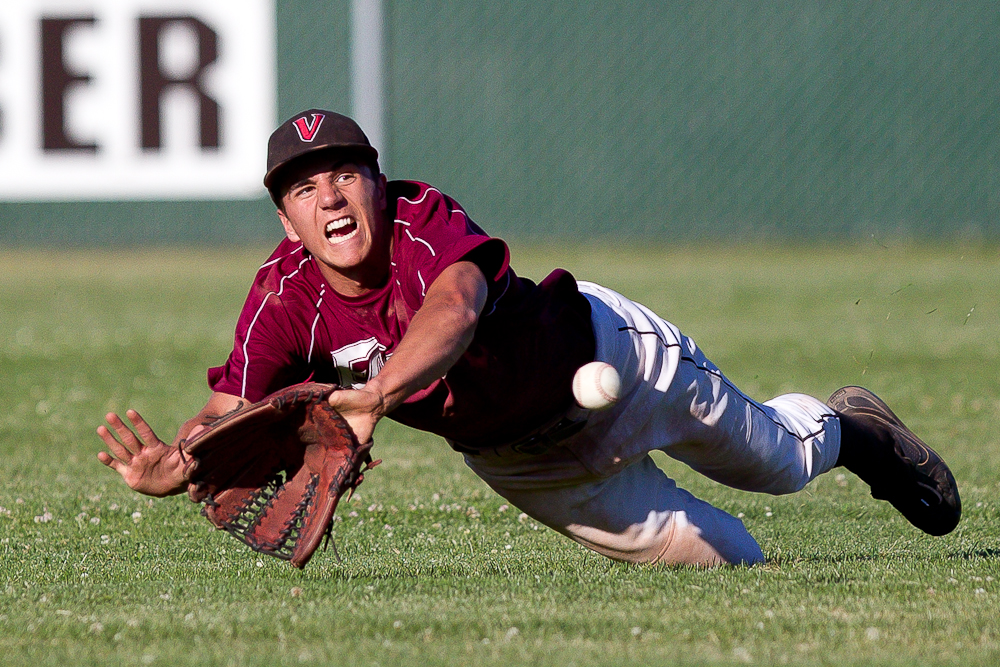
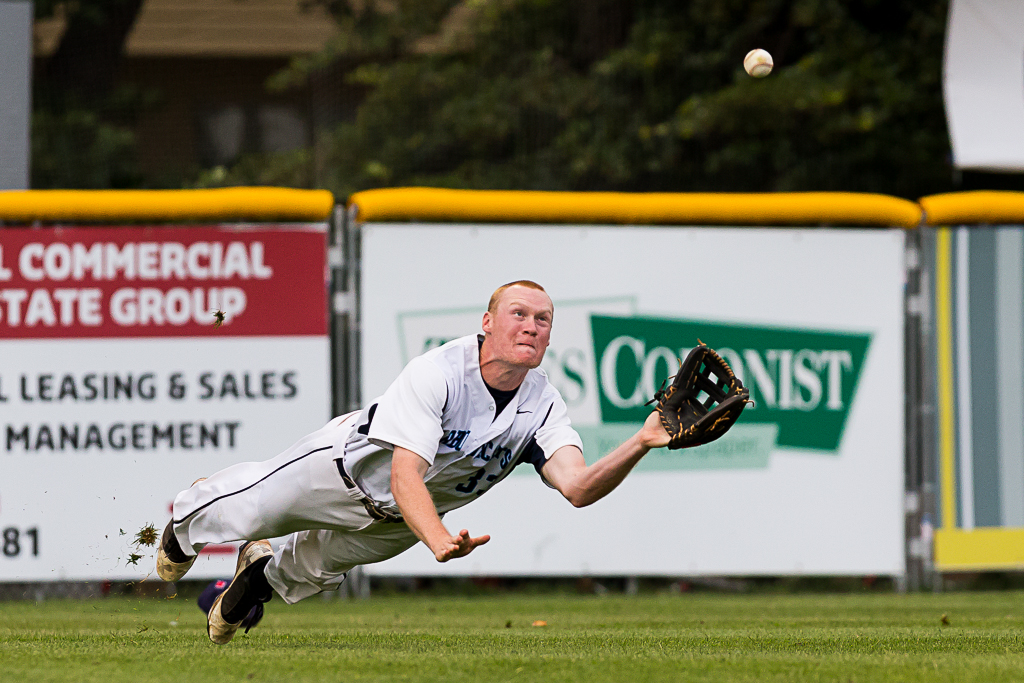
Finally, sometimes the biggest fish can be caught off the field of play. Look for shots of fans or other promotions happening during the game that can make compelling, interesting or just plain weird photos. Depending on the game and the level of action, these may be the best images of the evening, so try not to ignore them!
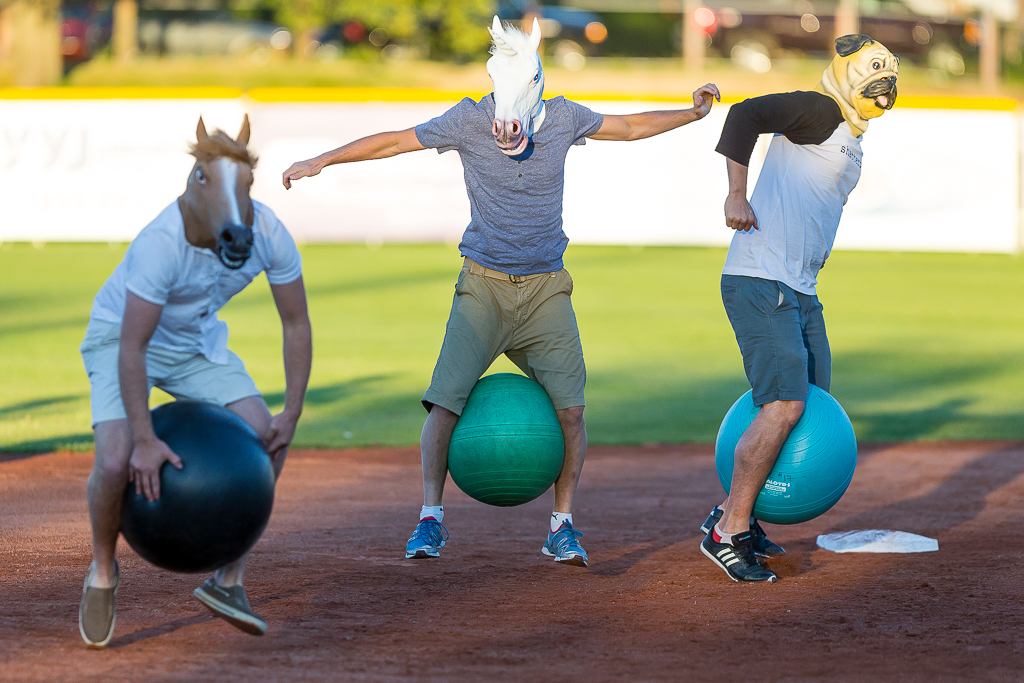
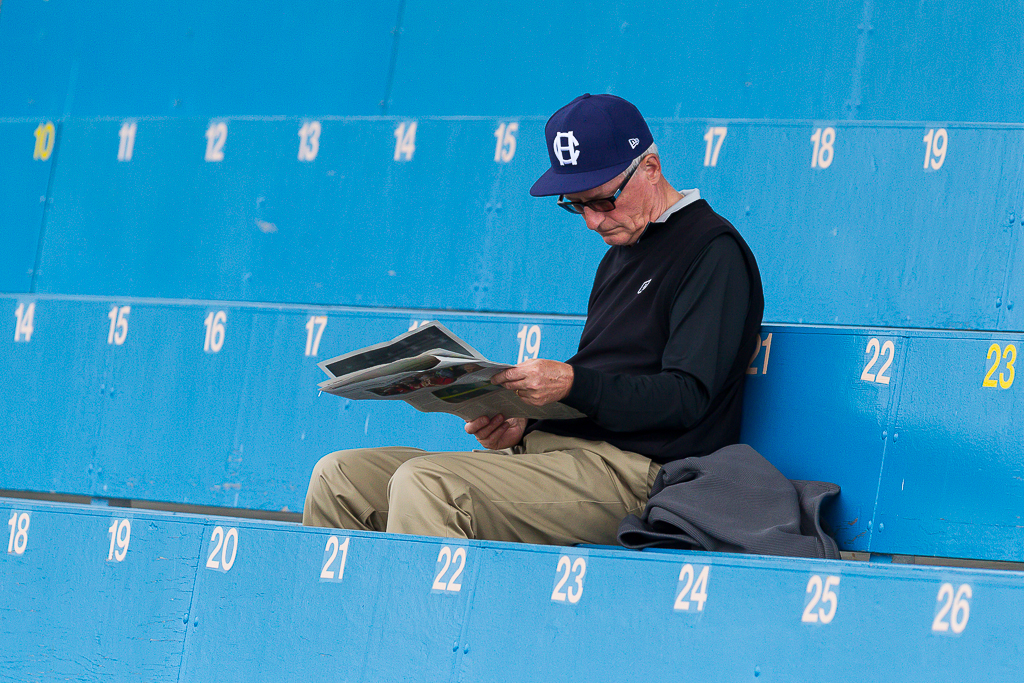
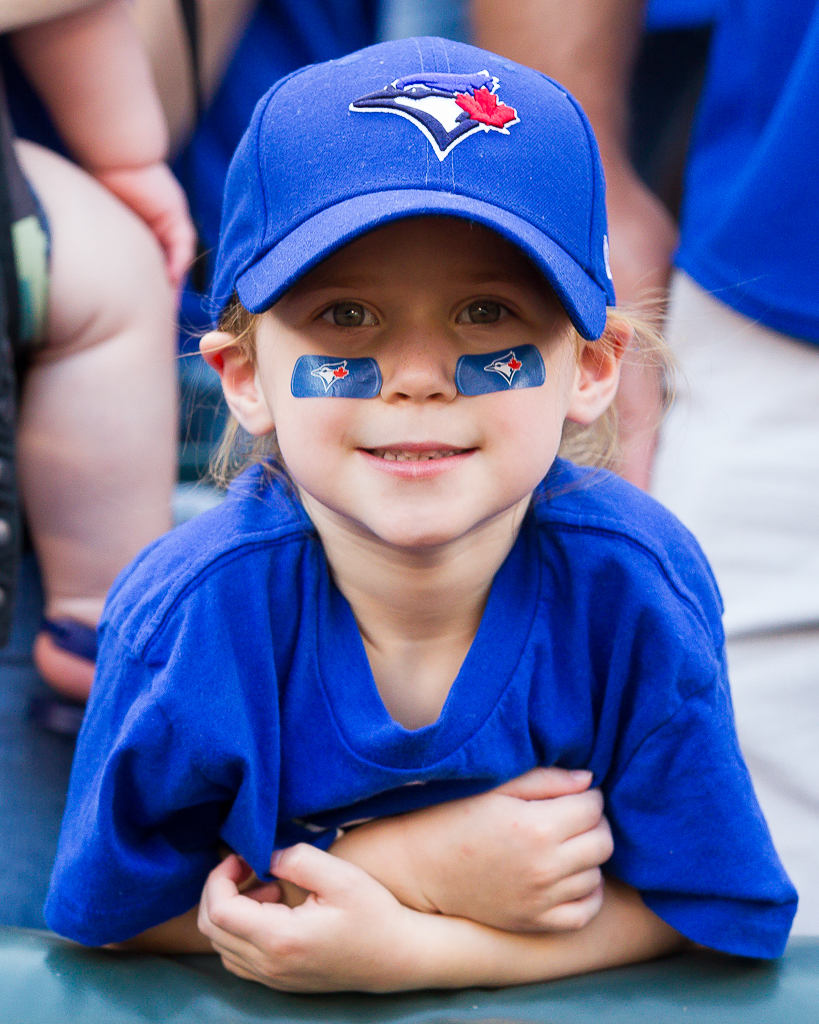
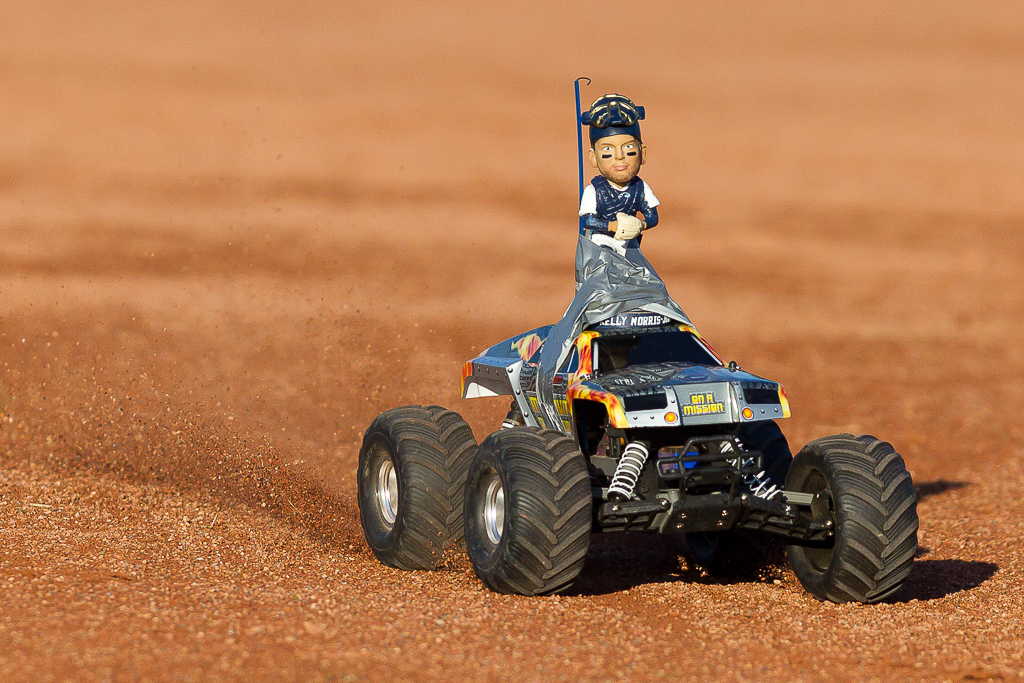
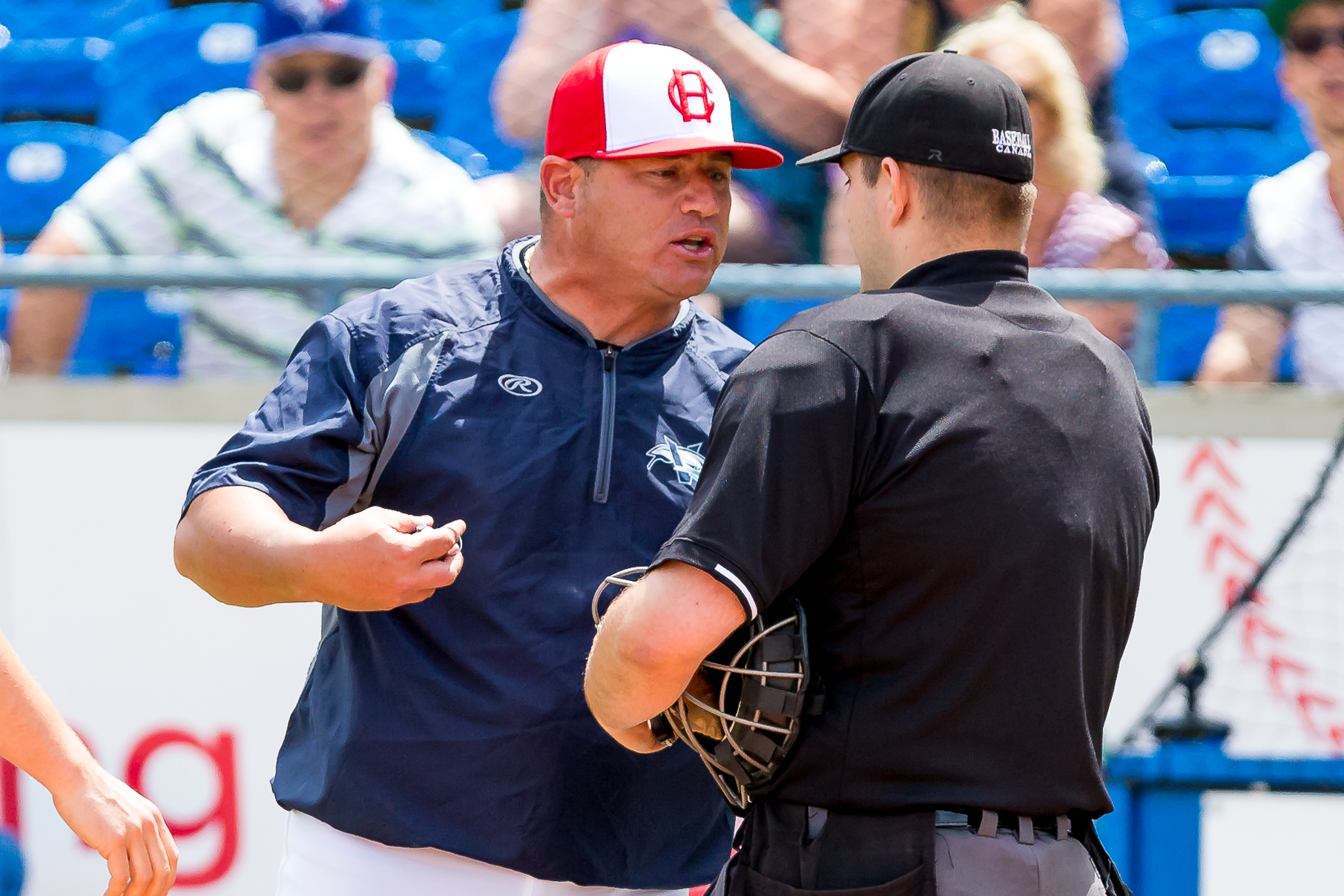
And when in doubt, if there is ever a coach – umpire argument, be sure to capture it! They can be priceless!
More of Christian J. Stewart’s baseball photography can be found at: https://christianjstewart.zenfolio.com/baseball




Summer Collegiate
Victoria HarbourCats – Fall 2026 Indoor Training Clinics Now Open for Registration

Summer Collegiate
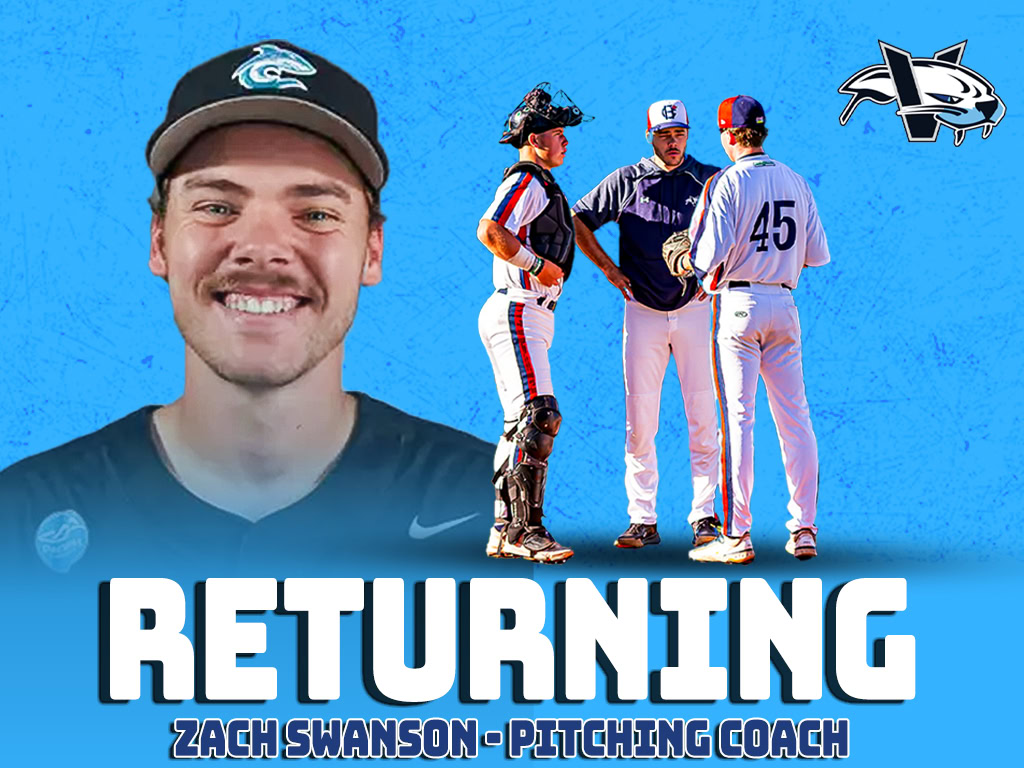
Victoria HarbourCats – Zach Swanson Returning as Pitching Coach for HarbourCats in 2027
September 2, 2026
For immediate release
VICTORIA, B.C. – After a successful debut season in the West Coast League, Zach Swanson will be back as Pitching Coach for the Victoria HarbourCats.
Head Coach Todd Haney is pleased to be putting together the key pieces of his staff already for the 2027 season, and that includes Swanson, the Victoria product and former college pitcher, after setting notable records in 2026. Swanson is a Lambrick Park graduate who played for the Victoria Eagles and Mariners, and pitched collegiately at San Diego Christian and Park University-Gilbert, earning an MBA in the process.
The records and notables of the 2026 HarbourCats:
- Most team strikeouts (536) in team history in a season, two short of a WCL record (and notably, the HarbourCats would have played two more games, but they were cancelled due to smoky conditions in Washington State)
- Highest K/9 rate in WCL history (10.48)
- Second in batting average against (.235)
- Fourth in league ERA (4.48)
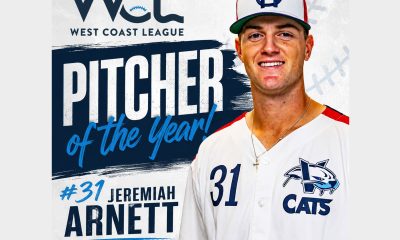
- Right-handers Jeremiah Arnett (66) and Erik Rico (64) now sit first and second in HarbourCats history in strikeouts in a season, and both were named all-stars – on top of it, Arnett was named the WCL Pitcher of the Year
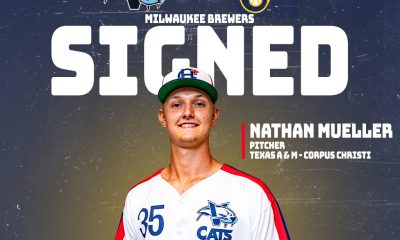
- HarbourCats reliever Nathan Mueller was signed by the Milwaukee Brewers and pitcher Will Zielinski was a 20th round pick of the Detroit Tigers
Swanson is the Pitching Coach at Hawaii Pacific University (NCAA Division 2) in Honolulu, entering his second year – in his first season, Swanson had three all-conference pitchers and the team ERA improved by more than a run per game.
“I’m incredibly excited to welcome Zach back as our pitching coach for the 2027 season. He built tremendous trust with our pitchers and has a great understanding of what it takes to develop players,” said Haney, who earlier this week added former MLB infielder Jeff Frye to the coaching staff for 2027.
“Our pitching staff responded to Zach’s leadership every single day, and we saw real growth both on and off the mound. Zach brings an exceptional work ethic, passion and competitive edge to our staff. Our pitchers are fortunate to have the opportunity to work with him now, as it’s only a matter of time before Zach is an MLB pitching coach.”
Swanson is excited to return to a team he knows well, holding many roles – batboy, to player, to play-by-play voice in 2022. Swanson was Victoria’s starting pitcher for Game 1 of the WCL final in 2019 against the Corvallis Knights in a game played at Wilson’s Group Stadium at RAP.
“It’s a joy and a privilege to be returning to Victoria in 2027,” said Swanson, son of Managing Partner Jim Swanson.
“After a 2026 season full of development, my wife Madeline and I are looking forward to coming back to this great city. I can’t wait to help write another chapter – both in the lives of these athletes and in the history books of this organization.”
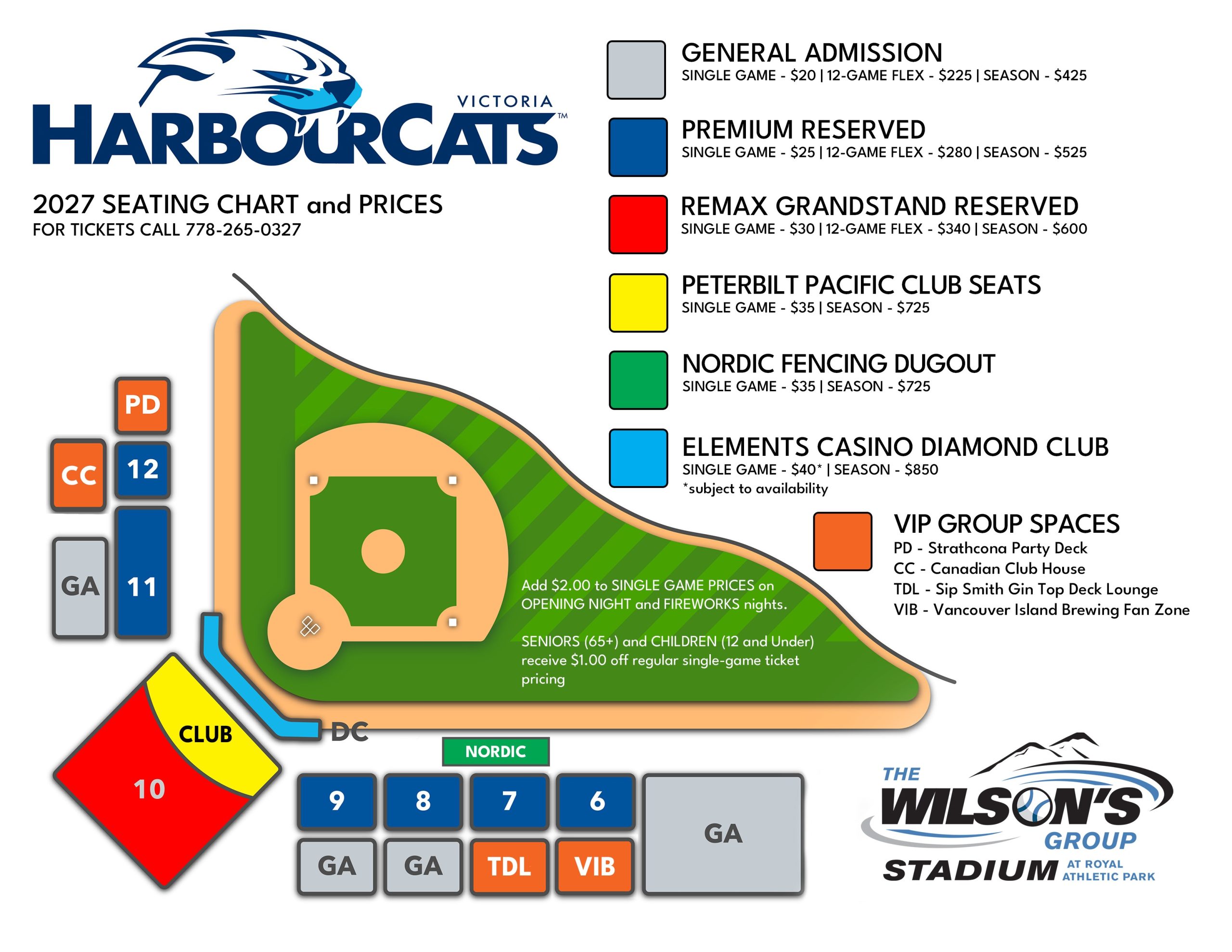
The HarbourCats have started the recruiting process for 2027 already, and Season Ticket Memberships are now available for purchase or renewal. New members may order their seats on-line if desired at harbourcats.com/tickets (click the Membership tab), or by calling the office at 778-265-0327.
Renew or purchase your seats by September 30th to be eligible to win a round trip airfare on Harbour Air to Vancouver.
The HarbourCats 2027 schedule is expected to be announced in late October 2026, with single-game tickets expected to be available by December 1, 2026.
August 31, 2026
For immediate release
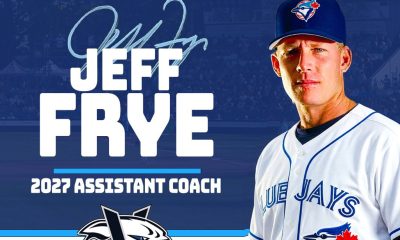
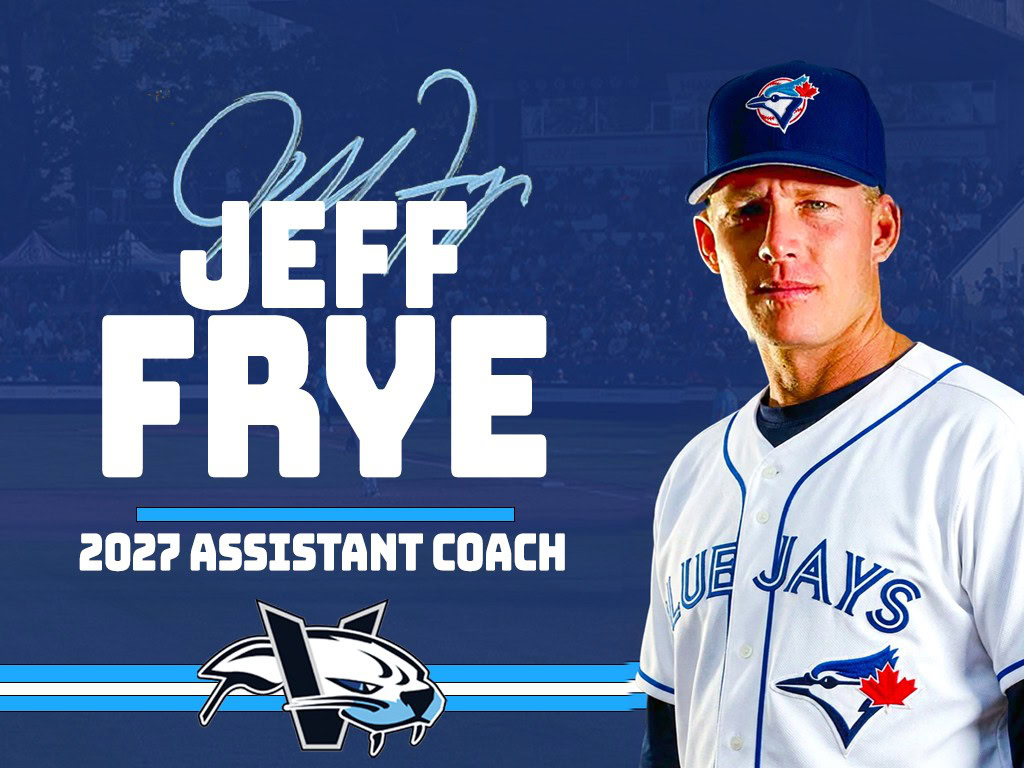
VICTORIA, B.C. — Add another former Major League player to the coaching staff of the Victoria HarbourCats of the West Coast League — and one who definitely has opinions on how the game should be played.
Jeff Frye, who registered nine years and 15 days of MLB service and 667 big-league games overall, joins the staff led by Head Coach Todd Haney, another former MLB infielder who himself played parts of five seasons with the Expos, Cubs and Mets. Haney enters his seventh season as Victoria’s Head Coach in 2027 and has been with the HarbourCats since 2018.
The versatile Frye, who now lives in Maryland, played mostly second base for Texas, Boston, Colorado and the Toronto Blue Jays, and hit for the cycle as a member of the Blue Jays. Frye had a career .290 batting average and slugged 16 home runs — he had 626 hits in the big leagues, 162 of them for extra bases. He also stole 56 bases and only struck out 279 times in 2,451 plate appearances.
“I am absolutely thrilled to welcome Jeff to our coaching staff. Jeff knows exactly what it takes to compete at the highest level,” said Haney.
“He brings a winning mindset, tremendous baseball knowledge and a passion for helping players succeed. His incredible experience and expertise will elevate our player development as we continue our focus of bringing a championship home to our fans.”
Frye is also very well known in baseball social media circles (follow @shegone03 on X) for unabashedly standing up for the game’s fundamentals and traditional values — which are also important to Haney and the HarbourCats organization.
“I’m excited about the opportunity to coach with my buddy Todd Haney in the beautiful city of Victoria B.C.,” said Frye, who was born in California but played high school and college baseball in Oklahoma before being drafted by the Rangers in 1988 (30th round). (Haney, a native Texan, was a 38th round pick of the Seattle Mariners in 1987, the same draft the Mariners chose Ken Griffey Jr. first overall.)
“I’ve always had the desire to get back on the field teaching the game I love and it’s finally here. Let’s get to work!”
Frye, who celebrates his 60th birthday today, played college baseball at Carl Albert State College and Southeastern Oklahoma State, where he set program records with a .455 batting average in 1988 and a .420 career batting average. Despite being an undersized guy — a playing profile very much like Haney had in college and pro — Frye was all-conference twice, an all-American, conference player of the year, and was inducted into the Southeastern athletics hall of fame.
Frye also used two summers with the Fort Smith Red Sox in the Jayhawk League (1986-87) as valuable development, so he understands the value of baseball players playing baseball for a quality organization.
The HarbourCats franchise has a legacy of attracting former MLB players to be part of the coaching staff, including Greg Swindell, Mark Petkovsek, Brian McRae, and current local assistant coach Steve Sinclair, who played parts of two seasons with the Blue Jays and Mariners. The team also had Manny Ramirez as a guest coach in 2024 when his two sons, Manny Jr. and Lucas, played for the team.
The HarbourCats have started the recruiting process for 2027 already, and Season Ticket Memberships are now available for purchase or renewal. New members may order their seats on-line if desired at http://harbourcats.com/tickets (click the Memberships tab), or by calling the office at 778-265-0327.
Existing members who have accounts in good standing on SHOWPASS can simply log into their account to renew, or can also call the office or pop in to pay for their 2027 seats.
Renew or purchase your seats by September 30th to be eligible to win a round trip airfare on Harbour Air to Vancouver.
The HarbourCats 2027 schedule is expected to be announced in late October 2026, with single-game tickets expected be to available by December 1, 2026.


Victoria HarbourCats – Fall 2026 Indoor Training Clinics Now Open for Registration

Victoria HarbourCats – Zach Swanson Returning as Pitching Coach for HarbourCats in 2027

Victoria HarbourCats – Former MLB infielder Frye joins HarbourCats coaching staff



Mike Berezowski
March 9, 2021 at 5:04 pm
Great article and photos — thanks for the tips!